When deciding between precision machined studs and standard threaded rods, precision machined studs offer unequivocally superior alignment and load control. This is due to their tightly controlled manufacturing processes, which allow for precise unthreaded shanks for alignment, superior thread-form accuracy for predictable clamping force, and the use of certified, high-strength materials for ultimate reliability. While standard threaded rods are suitable for general construction, they lack the critical tolerances required for high-performance machinery, molds, and critical joints.
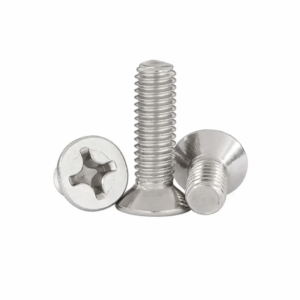
In the world of mechanical assembly and engineering design, fasteners are the unsung heroes that hold everything together. However, not all fasteners are created equal. The choice between a common, off-the-shelf standard threaded rod and a custom, precision machined stud can be the difference between a system that performs flawlessly for years and one that suffers from misalignment, premature wear, or catastrophic failure. This article delves into the critical differences between these two components, exploring why for any application demanding accuracy and reliability, the choice is clear.
Table of Contents
- Understanding the Fundamentals: What’s the Difference?
- The Critical Factor: Manufacturing Processes and Their Impact
- Why Precision Machined Studs Excel in Component Alignment
- Mastering Load Control: A Deep Dive into Clamping Force and Reliability
- Application-Specific Scenarios: When to Choose Which?
- Beyond Performance: The Total Cost of Ownership
- Conclusion: Investing in Precision is Investing in Performance
Understanding the Fundamentals: What’s the Difference?
At a glance, a machined stud and a threaded rod might seem to serve a similar purpose. Both are cylindrical fasteners with external threads. However, their design intent, manufacturing process, and performance capabilities place them in entirely different classes of engineering components.
What is a Standard Threaded Rod?
A standard threaded rod, often called an all-thread rod or ready-rod, is a commodity fastener. It is essentially a long bar of metal, typically a low-carbon steel, that is threaded along its entire length. The primary manufacturing method is thread rolling, a high-speed process where the rod is passed through dies that cold-form and displace material to create the threads. This method is cost-effective for mass production, but it results in looser tolerances (typically Class 1A or 2A) and offers no specific features for precise alignment.
What is a Precision Machined Stud?
A precision machined stud, in contrast, is an engineered component designed for a specific application. It is manufactured from a certified bar of a specific material—often high-strength alloy steels, stainless steels, or exotic alloys—using CNC turning, milling, and grinding processes. This allows for the creation of complex features, including unthreaded shanks (shoulders), pilot points, and multiple thread pitches on a single part. The threads are typically cut or ground, resulting in a highly accurate thread form with tight tolerances (often Class 3A) and a superior surface finish. These studs are designed not just to clamp, but to precisely locate and align components.
| Feature | Standard Threaded Rod | Precision Machined Stud |
|---|---|---|
| Manufacturing Process | Roll Forming (Cold Forming) | CNC Machining (Turning, Grinding, Thread Cutting) |
| Tolerances | Loose (e.g., Class 1A/2A) | Tight (e.g., Class 3A), controlled concentricity & perpendicularity |
| Alignment Features | None; threads along the entire length | Precisely ground unthreaded shanks/shoulders act as dowels |
| Material Options | Limited; typically low-carbon or B7 steel | Virtually unlimited; specified alloys, certified and heat-treated |
| Load Control | Unpredictable torque-tension relationship | Highly predictable and repeatable clamping force |
| Typical Applications | General construction, hanging supports, bracing | Injection molds, engines, pressure vessels, precision machinery |
| Cost | Low (Commodity) | Higher (Engineered Component) |
The Critical Factor: Manufacturing Processes and Their Impact
The fundamental performance differences between these fasteners originate in how they are made. The manufacturing method dictates everything from material strength and thread accuracy to the very features that enable precise alignment.
The Roll Forming of Threaded Rods
Thread rolling is a chipless manufacturing process that is incredibly efficient. It works by plastically deforming the material to form the thread’s crests and roots. While this process can increase the surface hardness and fatigue resistance of the threads themselves, it offers little control over the overall geometry of the rod. The pitch diameter, lead, and straightness can vary significantly, leading to inconsistencies that directly impact how a fastener behaves under load.
The CNC Machining of Precision Studs
CNC machining is a subtractive process where material is precisely removed from a solid bar to achieve a desired geometry. This grants engineers complete control over every aspect of the stud’s design. Threads can be single-point cut or ground after heat treatment to achieve an exceptionally smooth and accurate profile. More importantly, critical features like the shank diameter, the perpendicularity of shoulder faces to the centerline, and the concentricity between the threads and the shank can be held to tolerances of a few ten-thousandths of an inch. It is this level of control that transforms a simple fastener into a precision alignment and clamping device.
Why Precision Machined Studs Excel in Component Alignment
In applications like assembling the two halves of an injection mold, mounting a cylinder head to an engine block, or joining flanges on a high-pressure vessel, alignment is not a luxury—it is a functional necessity. This is where precision machined studs are unrivaled.
The Role of Unthreaded Shanks (Shoulders)
The most significant advantage of a machined stud for alignment is its unthreaded shank or shoulder. This section of the stud has a precisely ground outside diameter that fits snugly into the clearance holes of the components being joined. In effect, the stud acts as both a fastener and a high-strength dowel pin simultaneously. This guarantees that the components are perfectly concentric and radially aligned before any clamping force is even applied. A standard threaded rod, with threads running its full length, has no such locating feature and allows for significant “slop” or movement within the bolt holes.
Concentricity and Straightness Tolerances
Because they are machined in a single setup on a CNC lathe, the threads, shank, and any other features of a precision stud are perfectly concentric with each other. This means the stud pulls straight and true along its central axis when tightened. Standard threaded rods, due to the stresses of the rolling process and less stringent quality control, can have issues with straightness (bowing) and concentricity. A bent or eccentric rod will introduce unwanted side loads and stresses, compromising alignment and potentially damaging components during assembly.
Lead-in Features and Pilot Points
Custom machined studs can incorporate features like tapered pilot points or generous chamfers. These design elements help guide the stud into its mating hole during assembly, preventing cross-threading and damage to delicate internal threads or component surfaces. This is particularly crucial in automated assembly processes or in situations with tight access, where feel and precision are paramount.
Mastering Load Control: A Deep Dive into Clamping Force and Reliability
The primary job of a threaded fastener is to create and maintain a specific clamping force (preload) to hold a joint together. Achieving a precise and predictable clamp load is vital for joint integrity, gasket sealing, and fatigue life. Here again, the differences are stark.
The Torque-Tension Relationship: Predictability is Key
When we tighten a nut, we apply torque. The goal is to translate that torque into a specific tension, or stretch, in the stud. However, up to 90% of applied torque is consumed overcoming friction—under the nut face and in the threads. With a standard threaded rod, the rough surface finish and inconsistent thread geometry lead to a highly variable coefficient of friction. This means that applying the same torque value to two different rods can result in dramatically different clamp loads, making the joint unreliable. The smooth, precise threads of a machined stud provide a consistent and much lower friction value, leading to a highly predictable and repeatable torque-tension relationship.
Thread Class and Pitch Diameter Control (e.g., 2A vs. 3A)
Threads are classified by their fit. Standard rods typically use a Class 2A fit, which is designed for ease of assembly and has a significant amount of clearance. Precision studs are often specified with a Class 3A fit, which has a much tighter tolerance on the pitch diameter. This tighter fit minimizes movement between the male and female threads, ensuring the load is distributed evenly across all engaged threads. This uniform load distribution prevents localized stress concentrations and significantly improves the fatigue resistance of the entire joint.
Material Integrity and Heat Treatment
With a precision machined stud from a reputable supplier like Xiluomold, you know exactly what you are getting. The material is certified (e.g., 4140, 4340, H13) and can be heat-treated to achieve specific mechanical properties, such as tensile strength and hardness, required to handle the design loads. Standard threaded rods are often made from unspecified low-grade steel with no heat treatment, making their ultimate tensile strength and yield point a dangerous unknown in any critical application.
Application-Specific Scenarios: When to Choose Which?
The choice is ultimately dictated by the demands of the application.
When Standard Threaded Rods Are Sufficient
Standard threaded rods are perfectly acceptable for static, low-stress applications where precise alignment and load control are not primary concerns. These include:
- Hanging pipes, ductwork, or cable trays
- Temporary construction bracing
- Simple furniture or framework assembly
- General-purpose anchoring in concrete
When Precision Machined Studs Are Non-Negotiable
For any application where performance, safety, and reliability are paramount, the investment in a precision machined stud is essential. These include:
- Injection Molds and Die-Casting Dies: Where perfect alignment of mold halves is critical for part quality and preventing tool damage.
- High-Pressure Flanges and Vessels: Ensuring uniform gasket compression for a leak-proof seal.
- Engine Cylinder Heads and Main Bearing Caps: Where precise clamping force is required to contain combustion pressures and maintain bearing clearances.
- Turbine Casings and Aerospace Assemblies: High-fatigue, high-stress environments where joint failure is not an option.
- Precision Machine Tools: For assembling components where rigidity and accuracy are key to the machine’s performance.
Beyond Performance: The Total Cost of Ownership
It’s easy to look at the per-piece price and conclude that standard threaded rods are the economical choice. This, however, is a classic example of the upfront cost fallacy.
The Upfront Cost Fallacy
Yes, a standard threaded rod is significantly cheaper to purchase than a custom machined stud. It is a mass-produced commodity. A machined stud is a low-volume, high-precision component requiring skilled labor, advanced machinery, and certified materials, which naturally increases its price.
The Hidden Costs of Failure
Consider the downstream costs of using an inadequate fastener in a critical application. What is the cost of a misaligned mold producing thousands of dollars in scrap parts before the issue is discovered? What is the cost of machinery downtime caused by a failed joint? What is the cost of a fluid leak from a poorly sealed flange, or worse, the safety implications of a structural failure? When viewed through the lens of total cost of ownership, the higher initial price of a precision machined stud is a small insurance premium against these much larger financial and operational risks.
Conclusion: Investing in Precision is Investing in Performance
The debate between precision machined studs and standard threaded rods is not about which is “better” in a vacuum, but about which is correct for the engineering task at hand. For general, non-critical fastening, a standard rod is a viable, low-cost solution. However, for any system that depends on exact component alignment, predictable and reliable clamp load, and verified material strength, the precision machined stud is the only responsible choice.
The unthreaded shank provides alignment that a fully threaded rod can never achieve. The precisely formed threads and certified materials provide a level of load control and safety that is impossible to guarantee with a commodity product. Ultimately, choosing a precision machined stud is not an expense; it is an investment in the integrity, performance, and longevity of your entire assembly.
For critical applications where failure is not an option, trust the precision engineering of custom machined studs. Contact Xiluomold’s experts today to discuss your specific requirements and ensure your design is built on a foundation of precision and reliability.