When choosing between machine screws and threaded inserts for long-term reliability, threaded inserts are the superior option, particularly in softer materials like plastics, composites, and aluminum. While machine screws driven into tapped holes offer a fast and cost-effective solution for initial assembly, threaded inserts create a durable, wear-resistant metal thread within the host material. This significantly enhances pull-out strength, resists torque-out, and allows for repeated assembly and disassembly without degrading the joint’s integrity, making them the champion for applications where durability and serviceability are paramount.

In the world of product design and manufacturing, the integrity of a fastened joint is critical to the overall quality and lifespan of the final product. A single point of failure can lead to costly warranty claims, product recalls, and a damaged brand reputation. Two of the most common methods for creating threaded joints are using a machine screw in a directly tapped hole or installing a threaded insert to receive the screw. Understanding the fundamental differences, advantages, and limitations of each is crucial for any engineer or designer aiming for optimal long-term reliability. This comprehensive guide will explore the nuances of both fastening solutions to help you determine which option is truly best for your specific application.
Table of Contents
- What Are Machine Screws? A Fundamental Look
- What Are Threaded Inserts? Enhancing Joint Integrity
- Head-to-Head Comparison: Machine Screws vs. Threaded Inserts
- Key Factors in Deciding: Which Fastener is Right for Your Application?
- The Long-Term Reliability Verdict
- Partner with RivetJL for Your Fastening Needs
What Are Machine Screws? A Fundamental Look
A machine screw is a type of fastener characterized by its fine, uniform threads along the entire length of its shank. Unlike wood screws or self-tapping screws, they are designed to be fastened into a pre-existing, matching internal thread, a process known as direct tapping. This internal thread is typically created by cutting or forming threads directly into the parent material of the assembly. They are a foundational component in countless assemblies, from consumer electronics to industrial machinery, valued for their simplicity and precision.
How Do Machine Screws Work in an Assembly?
The process of using a machine screw is straightforward. First, a hole is drilled into the component, often referred to as the parent material. Next, a tool called a tap is used to cut the helical grooves that form the internal thread. The machine screw is then driven into this newly created threaded hole. The clamping force is generated as the screw is tightened, pulling the components together. The reliability of this joint is entirely dependent on the strength and integrity of the threads formed in that parent material.
Key Advantages of Using Machine Screws
The primary appeal of using machine screws in directly tapped holes lies in its efficiency and low initial cost. There is no need for an additional component (the insert), which simplifies inventory management and the bill of materials (BOM). The assembly process is also very fast; drilling and tapping can be automated for high-volume production, making it a highly economical choice for one-time assembly where the parent material is sufficiently hard and strong, such as steel or other hard metals.
Where Do Machine Screws Fall Short on Reliability?
The main drawback of direct tapping becomes apparent when considering long-term reliability, especially in certain conditions. Softer materials like plastics, aluminum, and composites do not have the inherent strength to support durable threads. This leads to several common failure modes:
- Thread Stripping: Over-torquing during initial assembly or subsequent servicing can easily strip the weak threads in the parent material, rendering the joint useless.
- Vibrational Loosening: In applications exposed to vibration or thermal cycling, the threads in soft materials can deform or “creep,” causing the screw to lose its preload and loosen over time.
- Limited Reusability: Each time a machine screw is removed and re-installed, it causes wear on the parent material’s threads. After just a few cycles, the fit can become loose, compromising the joint’s clamping force and overall integrity. This is a significant issue for products that require routine maintenance or battery replacement.
What Are Threaded Inserts? Enhancing Joint Integrity
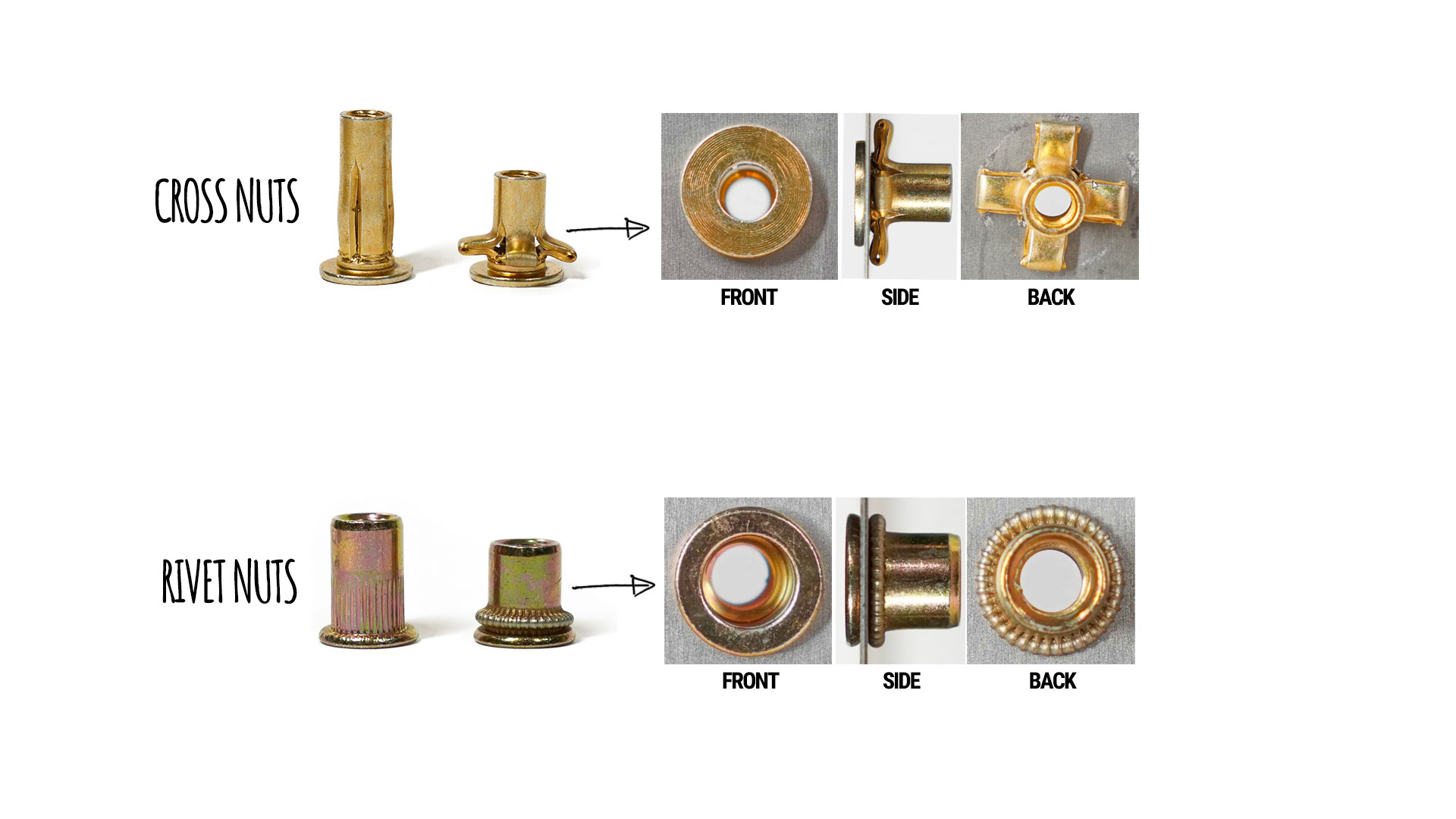
A threaded insert, sometimes called a thread bushing, is a hollow cylinder, typically made of a strong metal like brass, stainless steel, or steel, that features internal threads on the inside and a specialized pattern of knurls, threads, or barbs on the outside. It is designed to be permanently installed into a parent material, effectively creating a durable, metal-lined threaded hole in a material that would otherwise be too weak. It acts as an anchor, reinforcing the joint and protecting the parent material from the stresses of fastening.
How Do Threaded Inserts Function?
Unlike direct tapping, using a threaded insert is a two-step process. First, the insert is installed into a pre-drilled or molded hole in the parent material. The installation method depends on the type of insert: heat-set or ultrasonic inserts are melted into thermoplastics, self-tapping inserts cut their own threads into the material, and press-in inserts are pressed into the hole, using knurls to grip the wall. Once the insert is installed, it becomes an integral part of the component. A standard machine screw can then be threaded into the insert, creating a robust and reliable metal-on-metal connection.
The Decisive Advantages of Threaded Inserts
Threaded inserts are specifically engineered to overcome the weaknesses of directly tapped holes, offering a dramatic improvement in long-term reliability. Their benefits are substantial:
- Superior Strength: The external profile of the insert creates a large contact area with the parent material, providing exceptional pull-out strength (resistance to being pulled out) and torque-out resistance (resistance to spinning in the hole).
- Enhanced Durability and Reusability: By providing a hard, metallic thread, inserts allow for countless cycles of assembly and disassembly without any wear or damage to the soft parent material. This is crucial for access panels, battery compartments, and any serviceable part.
- Material Versatility: Inserts enable the use of strong, reliable threaded joints in a wide range of materials that are unsuitable for direct tapping, including thermoplastics, thermosets, composites, and soft metals like aluminum and magnesium.
- Repair of Stripped Threads: Inserts can also be used as a highly effective repair solution for holes where the original threads have been stripped or damaged.
Potential Disadvantages of Threaded Inserts
The primary trade-offs for the enhanced reliability of threaded inserts are cost and complexity. The insert itself is an additional component, which adds to the per-unit material cost. The installation process also requires an extra step and may necessitate specialized equipment (such as a heat-press or ultrasonic welder), which can increase assembly time and initial capital investment. However, this upfront cost is often easily justified by the prevention of costly field failures and warranty issues down the line.
Head-to-Head Comparison: Machine Screws vs. Threaded Inserts
To make the choice clearer, let’s directly compare these two fastening methods across several key performance and logistical metrics. This table provides a quick-reference guide for engineers and designers.
| Metric | Machine Screw (in Tapped Hole) | Threaded Insert (with Machine Screw) |
|---|---|---|
| Long-Term Reliability | Low to Moderate (Highly material-dependent) | Excellent |
| Pull-Out & Torque Strength | Limited by parent material strength. Poor in plastics/soft metals. | Very High. Distributes load over a larger area. |
| Reusability (Disassembly/Reassembly) | Very limited. Causes thread wear and stripping. | Excellent. Allows for repeated use without degradation. |
| Material Compatibility | Best for hard metals (steel, etc.). Poor for soft materials. | Excellent. Ideal for plastics, composites, and soft metals. |
| Initial Cost (Per Fastening Point) | Low. Only the screw and tapping process cost. | Moderate. Cost of insert + installation. |
| Assembly Time & Complexity | Low. Simple drill and tap process. | Moderate. Requires an additional insert installation step. |
| Vibration Resistance | Poor, especially in soft materials. Prone to loosening. | Good to Excellent. Insert design prevents backing out. |
Key Factors in Deciding: Which Fastener is Right for Your Application?
The answer to “which is better?” is always application-dependent. To make the correct engineering decision, you must ask the right questions about your product’s design, intended use, and life cycle.
What is the Parent Material?
This is the most critical question. If your design uses hard metals like steel or titanium, and the joint will not be frequently disassembled, direct tapping with a machine screw is often a perfectly reliable and cost-effective method. However, if you are working with thermoplastics (like ABS, Polycarbonate), composites (like carbon fiber), or soft metals (like aluminum, magnesium), a threaded insert is almost always the correct choice to ensure long-term joint integrity.
Will the Joint Be Assembled and Disassembled Frequently?
Consider the product’s entire lifecycle. Does it contain a battery that needs replacing? Is there an access panel for servicing internal components? If the answer is yes, then the joint must be designed for reusability. A machine screw in a tapped plastic or aluminum hole will fail quickly under these conditions. A threaded insert provides a durable metal thread that can withstand hundreds of fastening cycles, making it the only viable option for serviceable components.
What Environmental Stresses Will the Joint Face?
Will your product be subjected to significant vibration, shock, or wide temperature fluctuations? These conditions place immense stress on fastened joints. In a directly tapped hole in a soft material, vibration can cause the threads to deform and the screw to loosen. Thermal expansion and contraction can also compromise the joint. The robust anchoring of a threaded insert within the parent material provides superior resistance to these environmental forces, maintaining clamping load and ensuring the joint remains secure over time.
What Are the Project’s Budget and Volume Constraints?
While machine screws are cheaper per unit, it’s crucial to perform a total cost-benefit analysis. The small upfront cost of a threaded insert can be considered an insurance policy against much larger costs later on. A single field failure that requires a product return or a service technician visit can cost hundreds of times more than the insert that would have prevented it. For high-value or safety-critical products, the marginal increase in assembly cost for an insert is a wise and necessary investment in long-term reliability and brand protection.
The Long-Term Reliability Verdict
While machine screws have their place in specific, limited applications, threaded inserts are the clear winner when long-term reliability is the primary concern. They are not just a component; they are an engineering solution designed to reinforce and protect the most vulnerable part of a joint—the threads. By creating a strong, wear-resistant metal thread in any parent material, inserts eliminate the common failure modes of thread stripping and vibrational loosening associated with direct tapping in soft materials.
Choosing a threaded insert is a proactive decision to engineer durability into your product from the ground up. It is an investment in quality that pays dividends through increased product lifespan, enhanced customer satisfaction, and a significant reduction in costly failures and warranty claims. For any application in plastic, composite, or soft metal, or for any joint that requires serviceability, the question is not *if* you should use an insert, but *which* type of insert is best for your design.
Partner with RivetJL for Your Fastening Needs
Making the right fastening choice is critical to your product’s success. At RivetJL, we specialize in providing high-quality, reliable fastening solutions that meet the demanding standards of modern manufacturing. Our extensive catalog of threaded inserts and other fastening components is backed by deep engineering expertise. We don’t just sell parts; we provide solutions.
Whether you’re in the early stages of design or looking to improve the reliability of an existing product, our team is here to help. Contact us today to discuss your application, and let us help you select the perfect fastening solution that ensures your product’s long-term reliability and performance.