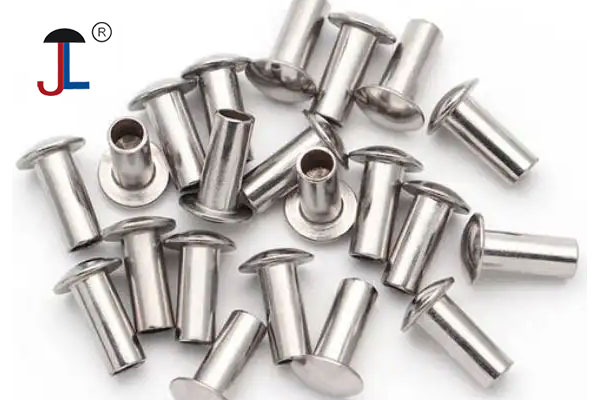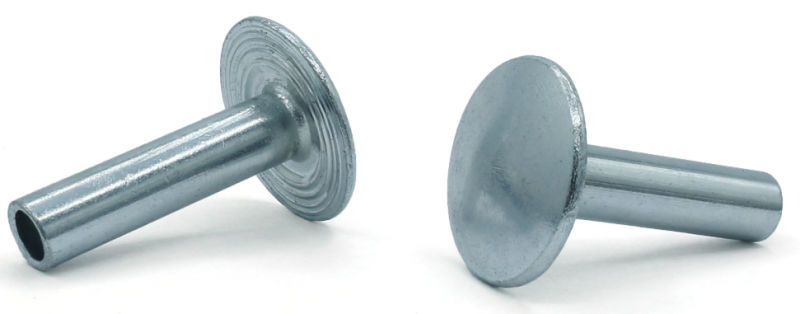
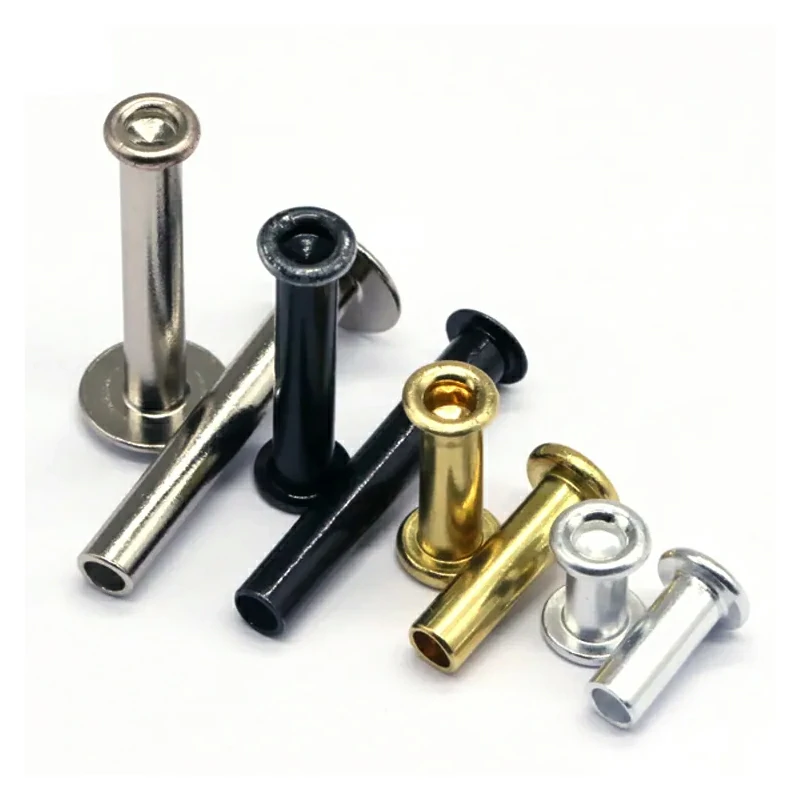
Nail screws, also known as screw-shank or ring-shank nails, significantly enhance long-term fastening stability by combining the rapid installation of a nail with the superior withdrawal resistance of a screw. Their unique threaded or ringed shanks grip wood fibers, creating a powerful mechanical lock that prevents the fastener from backing out over time due to wood expansion, contraction, vibration, or load-bearing stress. This results in stronger, more durable joints that resist squeaking, separation, and structural failure, making them a crucial component for achieving lasting stability in construction and manufacturing.
Table of Contents
- What Exactly Are Nail Screws? A Hybrid Fastening Solution
- The Core Mechanism: How Do Nail Screws Achieve Superior Stability?
- Nail Screws vs. Traditional Fasteners: A Comparative Analysis
- Which Applications Benefit Most from the Long-Term Stability of Nail Screws?
- Are There Any Downsides? Considerations for Using Nail Screws
- Choosing the Right Nail Screw for Your Project: A RivetJL Guide
- The Final Verdict: Why Nail Screws are an Investment in Durability
What Exactly Are Nail Screws? A Hybrid Fastening Solution
When exploring advanced fastening technologies, the term “nail screw” often emerges as a superior solution for projects demanding both efficiency and endurance. But what are they, precisely? A nail screw is an ingeniously designed hybrid fastener that merges the key attributes of a nail and a screw. It is driven into a material using a pneumatic nail gun or a hammer, offering the same rapid installation speed as a standard nail. However, its shank is not smooth. Instead, it features a helical thread or a series of concentric rings, much like a screw. This engineered shank is the critical feature that transforms it from a simple pin into a high-performance fastener with exceptional holding power.
To truly understand their effectiveness, one must examine the anatomy of a nail screw. It consists of three primary parts: the head, the shank, and the tip. The head is designed for impact from a nail gun or hammer. The tip is typically a standard diamond or chisel point, designed for easy penetration into wood or other materials. The true innovation lies in the shank. A ring-shank nail screw has dozens of small, sharp-edged rings that lock into wood fibers. A screw-shank or helical nail screw features a continuous, twisted thread that rotates as it’s driven, actively screwing itself into the material. This hybrid design solves a fundamental problem: the need for a fastener that can be installed quickly without sacrificing the long-term, unyielding grip required for structural integrity.
The Core Mechanism: How Do Nail Screws Achieve Superior Stability?
The remarkable long-term stability provided by nail screws is not magic; it is a direct result of sophisticated engineering principles designed to counteract the common causes of fastener failure. The secret lies in how the unique shank interacts with the substrate material, primarily wood. This interaction dramatically increases withdrawal resistance and ensures the joint remains tight and secure for years, even under challenging conditions.
Maximizing Withdrawal Resistance Through Friction and Interlocking
When a smooth-shank nail is driven into wood, its holding power relies almost entirely on static friction between the smooth metal and the compressed wood fibers. Over time, as the wood expands, contracts, or is subjected to vibration, these fibers relax, friction decreases, and the nail can begin to “pop” or back out. A nail screw, however, creates a far more robust connection. The rings or threads on its shank cut into the wood fibers, creating a mechanical interlock. Instead of just pressing against the fibers, it actively hooks and embeds itself within them. Pulling out a nail screw requires these wood fibers to be physically torn and sheared, an action that demands significantly more force than simply overcoming friction. This drastically increased withdrawal resistance is the primary reason for its enhanced stability.
Why a Helical or Ringed Shank is a Game-Changer
The geometry of the shank is what sets a nail screw apart. Imagine a screw-shank nail being driven by the powerful, instantaneous force of a nail gun. The helical thread forces the fastener to rotate as it penetrates the wood, much like a drill bit. This action carves a tight, corresponding thread into the wood itself, creating a perfect, custom-fit channel. The fastener is no longer just a pin; it is an integrated component of the wood assembly. For a ring-shank nail, each ring acts as a small, one-way barb. It slides in easily but resists being pulled out, as the sharp top edges of the rings dig into the wood. This design is exceptionally effective at providing a permanent, locked-in grip that holds fast against forces trying to pull the joint apart.
Resisting the Forces of Nature: Expansion, Contraction, and Vibration
Wood is a dynamic material; it swells with humidity and shrinks as it dries. This constant, cyclical movement, known as hygroscopic movement, places immense stress on fasteners. A smooth nail will slowly be worked out of its hole by this push-pull cycle, leading to loose boards, squeaky floors, and compromised structural joints. Nail screws are purpose-built to combat this. Because they are mechanically locked into the wood fibers, they move with the wood rather than being pushed out by it. This same principle applies to vibrations from foot traffic, machinery, or seismic activity. The interlocking threads absorb and dissipate these vibrational forces, maintaining a constant clamping force and ensuring the joint remains as tight as the day it was assembled.
Nail Screws vs. Traditional Fasteners: A Comparative Analysis
To make an informed decision for any construction or assembly project, it’s essential to understand how nail screws stack up against their more traditional counterparts: the smooth-shank nail and the standard screw. Each fastener has a specific role, but for applications demanding long-term stability, the differences are stark and significant.
Nail Screws vs. Smooth Shank Nails
The most direct comparison is with the standard smooth-shank nail. While both offer similar, lightning-fast installation speeds when used with a pneumatic nailer, their performance over time diverges dramatically. A smooth nail’s holding power, as mentioned, is based on friction and can degrade significantly. A nail screw, by contrast, can offer up to twice the withdrawal resistance or more compared to a smooth nail of the same size. This makes it the vastly superior choice for any load-bearing application or material exposed to movement, such as subflooring, roof sheathing, and decking. While a smooth nail might be adequate for temporary holding or light-duty framing, a nail screw provides a permanent, structural connection that you can trust for the long haul.
Nail Screws vs. Traditional Screws
Traditional screws are renowned for their incredible holding power and the ability to be removed. Their threads provide a powerful clamping force and excellent withdrawal resistance. However, their primary drawback is installation speed. Driving hundreds or thousands of screws with a drill is a time-consuming, labor-intensive process. Nail screws bridge this gap perfectly. They provide holding power that is highly comparable to screws—often approaching 80-90% of a screw’s withdrawal strength—but are installed in a fraction of the time. For a production environment or a large-scale construction project, this time-saving translates directly into reduced labor costs and faster project completion, all without making a major sacrifice in fastening stability.
| Feature | Smooth Nail | Traditional Screw | Nail Screw |
|---|---|---|---|
| Installation Speed | Very High | Low | Very High |
| Withdrawal Resistance (Holding Power) | Low to Moderate | Very High | High to Very High |
| Long-Term Stability | Poor (Prone to backing out) | Excellent | Excellent |
| Cost per Fastener | Low | High | Moderate |
| Labor Cost | Very Low | High | Very Low |
| Reversibility (Removal) | Difficult (Requires pry bar) | Easy (Can be unscrewed) | Very Difficult (Often permanent) |
Which Applications Benefit Most from the Long-Term Stability of Nail Screws?
The unique combination of speed and strength makes nail screws the ideal choice for a wide range of critical applications where fastener failure is not an option. Their ability to ensure long-term stability makes them a go-to solution for professional builders and manufacturers seeking to create durable, high-quality products and structures.
Structural Integrity in Framing and Sheathing
In structural assemblies, every connection counts. Nail screws are heavily favored for attaching roof and wall sheathing to frames. This is because sheathing panels form a “diaphragm” that gives a building its shear strength—the ability to resist racking and collapse from wind or seismic forces. If the fasteners loosen, the diaphragm weakens. By using nail screws, builders ensure the sheathing remains tightly bonded to the studs and rafters, maintaining the building’s structural integrity for its entire lifespan. The enhanced grip prevents panel uplift in high winds and keeps the entire structure rigid and secure.
Eliminating Squeaks in Subflooring and Decking
There are few things more annoying in a home than a squeaky floor. Floor squeaks are almost always caused by the subfloor panels moving up and down on the shanks of smooth nails as people walk across them. This micro-movement creates friction and noise. By using nail screws to fasten subflooring to floor joists, the panels are locked down tight. The mechanical interlock of the nail screw prevents any vertical movement, completely eliminating the primary cause of floor squeaks. The same logic applies to outdoor decking, where temperature and moisture fluctuations are even more extreme. Nail screws prevent deck boards from “cupping” or lifting, ensuring a safe, stable, and silent surface for years.
Securing Siding and Trim Against Weathering
Exterior siding and trim are constantly under assault from the elements: rain, sun, wind, and freeze-thaw cycles. These forces work tirelessly to pry materials from a building’s exterior. Smooth nails can quickly lose their grip, leading to loose siding, gaps in trim, and potential water intrusion. Using nail screws—especially those made from stainless steel or with a high-quality galvanized coating—provides a robust defense. The superior holding power ensures that siding and trim boards stay flat and tight against the sheathing, resisting wind-driven rain and preventing the warping and gaps that can lead to costly moisture damage and repairs.
Are There Any Downsides? Considerations for Using Nail Screws
While nail screws offer a powerful solution for long-term stability, it is important to acknowledge their specific characteristics to use them effectively. Their greatest strength—permanence—is also their primary consideration. Unlike traditional screws, most nail screws are not designed for easy removal. The same rings and threads that provide such a tenacious grip make backing them out extremely difficult, if not impossible, without causing damage to the surrounding wood. This makes them unsuitable for temporary assemblies or projects that may require future disassembly, like certain types of cabinetry or jigs. For such applications, a traditional screw remains the more practical choice.
Furthermore, proper installation is key to unlocking their full potential. It’s crucial to use the correct pneumatic nailer with the depth-of-drive properly adjusted. If the nail screw is overdriven, the head can crush the wood fibers and compromise the surface integrity, potentially weakening the connection. If it is under-driven, the head will protrude, creating a snag hazard and an incomplete joint. For professionals, this is a simple adjustment, but it’s a critical step that ensures the head is set flush with the material surface, maximizing the fastener’s performance and achieving the desired clamp load for ultimate fastening stability.
Choosing the Right Nail Screw for Your Project: A RivetJL Guide
Selecting the correct nail screw is just as important as deciding to use one. As experts in fastening solutions, we at RivetJL understand that material, coating, and size are critical variables. For exterior applications like decking or siding, choosing a nail screw made from 304 or 316 stainless steel is essential to prevent rust and corrosion, which can compromise the fastener and stain the surrounding wood. For interior structural use, a bright-finish or electro-galvanized fastener may be sufficient. However, for pressure-treated lumber (like ACQ), a hot-dip galvanized or stainless steel nail screw is mandatory to resist the wood’s corrosive chemical treatment.
The length and gauge of the nail screw must also be matched to the application. The general rule is that the fastener should penetrate the base material by at least 1.5 times the thickness of the material being attached. For example, when fastening 3/4″ subflooring to a 2x joist, the nail screw should penetrate at least 1-1/8″ into the joist. Consulting engineering specifications or building codes for your specific application is always the best practice. At RivetJL, we provide fasteners engineered to meet these demanding standards, ensuring you have the right component for a secure, durable, and long-lasting connection.
The Final Verdict: Why Nail Screws are an Investment in Durability
So, how do nail screws affect long-term fastening stability? The answer is unequivocally positive and profound. By creating a mechanical interlock within the substrate, they provide a powerful and permanent connection that resists the insidious effects of vibration, expansion, and contraction. They represent a smart investment in the quality and longevity of any project. While they cost slightly more per unit than a smooth nail, the immense gains in withdrawal resistance, structural integrity, and the prevention of costly callbacks (like fixing squeaky floors or loose siding) offer a return on investment that is unmatched.
In the trade-off between speed, cost, and performance, the nail screw occupies a sweet spot that is difficult to ignore. It delivers the installation efficiency of a nail with performance that rivals a screw, ensuring that what you build today remains strong, stable, and secure for decades to come. For any application where long-term stability is not just a preference but a requirement, the nail screw is no longer just an alternative; it is the professional standard.