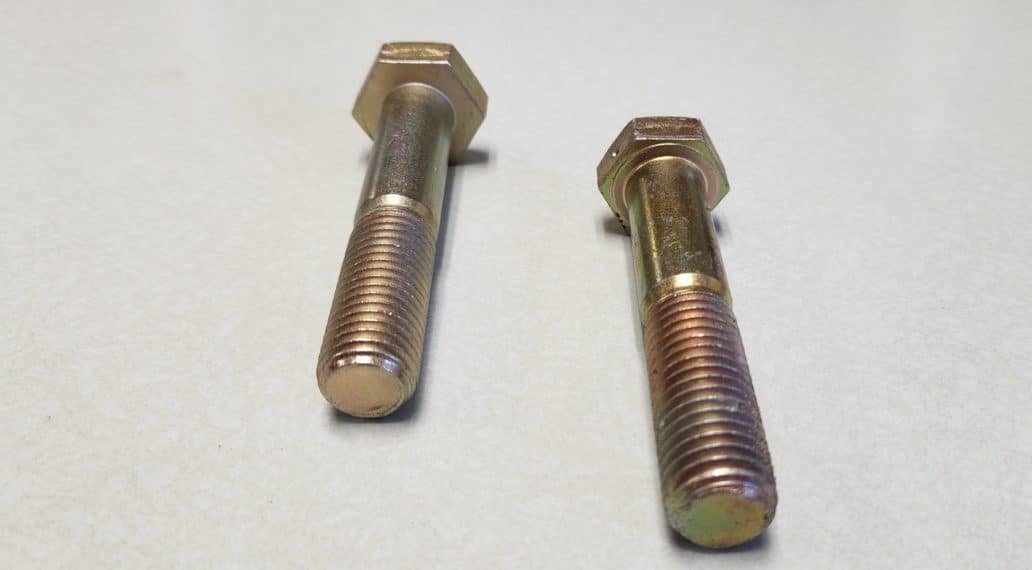
The primary difference between hex head bolts and socket head screws lies in their drive style and its direct impact on torque application and accessibility. Hex head bolts feature a robust, external hexagonal head tightened with a wrench or socket, making them ideal for high-torque applications where side clearance is available. In contrast, socket head screws (or Allen bolts) utilize an internal hex socket driven by an Allen key, a design that excels in tight, confined spaces and provides a clean, flush-mounted finish critical for precision machinery.

Selecting the correct fastener is a critical engineering decision that affects not only the structural integrity and performance of an assembly but also its manufacturability and serviceability. In the world of industrial applications, from heavy construction to precision injection molding, the debate between using a hex head bolt or a socket head cap screw is a constant consideration. This guide will provide an in-depth analysis of their fundamental differences, explore the nuances of torque capacity and clearance requirements, and help you determine which fastener is superior for your specific application.
Table of Contents
- A Fundamental Comparison: Head Style, Tools, and Design
- The Critical Factor: Which Fastener Handles Higher Torque?
- The Space Dilemma: How Accessibility Dictates Your Choice
- Application Showdown: Where Does Each Fastener Shine?
- Beyond Torque and Access: Other Key Considerations
- Making the Right Choice: A Summary
- Conclusion: The Right Fastener for a Superior Build
A Fundamental Comparison: Head Style, Tools, and Design
Before diving into the complexities of torque and clearance, it’s essential to understand the basic design differences that define these two fastener types. Their entire performance profile stems from one core distinction: where and how the turning force is applied.
The Hex Head Bolt, also known as a hex cap screw, is defined by its external hexagonal head. This design requires a tool, such as a spanner, wrench, or socket, to grip the head from the outside. This external engagement allows for a large contact surface area between the tool and the fastener, which is a key factor in its torque capabilities. The protruding head, however, requires significant radial (side) clearance for the tool to fit and operate effectively.
The Socket Head Screw, commonly referred to as a socket head cap screw or an Allen bolt, features a cylindrical head with an internal hexagonal recess. It is driven by an Allen key (or hex key) that fits inside the head. This internal drive mechanism eliminates the need for side clearance, allowing these screws to be used in counterbored holes or in assemblies where fasteners are placed very close together. This design offers a lower profile and a more streamlined appearance.
| Feature | Hex Head Bolt | Socket Head Screw (Allen Bolt) |
|---|---|---|
| Drive Style | External Hexagon | Internal Hexagon (Socket) |
| Required Tool | Wrench, Spanner, or Socket Set | Allen Key (Hex Key) |
| Accessibility Needs | Requires radial (side) clearance for tool access | Requires only vertical clearance for tool insertion |
| Typical Profile | Protruding Head | Low-profile, can be flush-mounted in a counterbore |
| Primary Strength | High torque transmission, robust design | Excellent for tight spaces, clean aesthetics |
The Critical Factor: Which Fastener Handles Higher Torque?
Torque is not just about tightness; it’s about achieving the correct *clamping force*—the pressure that holds an assembly together. The fastener’s ability to withstand and transmit torque without failing is paramount. Here, the external vs. internal drive design creates a significant performance gap.
Why Hex Head Bolts Excel in High-Torque Scenarios
Generally, for a given size, a hex head bolt can handle higher torque levels than a socket head screw. This superiority comes from several mechanical advantages. The force applied by a wrench or socket is distributed across the large, flat, external faces of the bolt head. This wide distribution minimizes stress concentration at any single point, reducing the risk of rounding off the corners under extreme load. Furthermore, the head of a hex bolt is typically larger and more massive than that of a socket head screw of the same thread diameter, providing more material to resist torsional forces.
This robustness makes hex head bolts the standard choice for structural applications, heavy machinery frames, and engine components where achieving maximum clamping force is a non-negotiable safety and performance requirement. The ability to use long-handled wrenches or powerful impact guns provides significant mechanical advantage, allowing technicians to apply immense torque reliably.
The Role of Socket Head Screws in Controlled Torque Applications
While hex bolts win on raw torque capacity, socket head screws offer superior performance in applications requiring precise, controlled torque. The deep, internal engagement of a high-quality Allen key provides a secure fit that minimizes the risk of the tool slipping, which can damage the fastener or the workpiece. This makes them ideal for sensitive equipment and precision assemblies where over-torquing could be catastrophic.
However, the internal socket is also their primary point of failure under excessive torque. The force is concentrated on the six internal corners of the recess. If too much force is applied, or if a low-quality or worn Allen key is used, the socket can “strip” or “cam out,” rendering the screw impossible to tighten or remove. For this reason, high-strength socket head screws (often Grade 12.9) are specified in applications like injection molding, where high but *precisely controlled* clamping force is needed to hold mold halves together against immense pressure.
The Space Dilemma: How Accessibility Dictates Your Choice
The theoretical torque capacity of a fastener is irrelevant if you cannot physically access it to tighten it properly. This is where the socket head screw has a clear and defining advantage.
The Unmatched Advantage of Socket Heads in Confined Spaces
When space is limited, the socket head screw is the undisputed champion. Because the Allen key inserts directly into the top of the fastener, it requires virtually no side clearance. This allows engineers to design more compact assemblies, placing fasteners in narrow channels, deep counterbored holes, or right next to other components. Imagine adjusting a component deep within a complex machine; there is often no room to swing a wrench. The socket head design, often paired with ball-end Allen keys that allow for angled entry, makes these once-impossible tasks straightforward.
This design feature is a key enabler for modern, compact product design. It allows for sleeker aesthetics and more efficient use of space, which is critical in everything from consumer electronics to the intricate network of channels and plates within an injection mold.
When External Drive is the Practical Choice
While requiring more space, the hex head bolt offers greater flexibility in the *type* of tool you can use. In an open environment, a hex head can be approached from multiple angles with an open-ended wrench, a ring spanner, or a socket. This can be particularly useful in field repairs or on construction sites where having the exact right tool might not be possible. The visibility and external grip make them faster to locate and engage, especially when working on large-scale equipment.
The need for side clearance is their main drawback. You must have enough room around the bolt head to fit the tool and, more importantly, to swing it through an arc to tighten or loosen it. In a well-planned design, this is not an issue, but in a retrofitting or repair scenario, it can become a major obstacle.
Application Showdown: Where Does Each Fastener Shine?
The choice between hex and socket head fasteners is rarely arbitrary. It’s dictated by the specific demands of the application.
Machinery & Precision Assemblies (e.g., Injection Molds)
Winner: Socket Head Screws
In the world of precision machinery, tool and die, and injection molding, socket head cap screws are the standard. Their zero-clearance requirement allows for compact and complex designs. At Rivetjl, we exclusively rely on high-tensile (Grade 12.9) socket head cap screws to assemble our high-precision injection molds. They can be recessed into counterbores, creating a perfectly flat, snag-free surface that is crucial for safety and operation. The controlled torque application ensures that mold plates are secured with uniform clamping force, preventing flash and ensuring part quality.
Structural & Heavy Construction
Winner: Hex Head Bolts
For building bridges, erecting steel frames, or assembling heavy-duty industrial equipment, hex head bolts are the go-to fastener. Their ability to withstand enormous torque values is essential for creating strong, rigid joints. In these applications, space is rarely a concern, but the need for maximum clamping force is paramount. Their compatibility with impact wrenches and larger tools makes for rapid and robust assembly on a large scale.
Automotive & General Repair
Winner: A Mix of Both
The automotive industry is a perfect example of both fastener types coexisting. Hex head bolts are typically used for engine mounts, suspension components, and frame assembly—areas requiring high strength and where access is generally open. Socket head screws, on the other hand, are often found in engine internals, transmission components, and interior fittings where space is at a premium and a flush finish may be required.
Beyond Torque and Access: Other Key Considerations
While torque and accessibility are the primary drivers, other factors can influence your decision.
Tooling and Installation Efficiency
Hex head bolts and the corresponding sockets and wrenches are ubiquitous and generally less expensive than a comprehensive set of high-quality Allen keys. In a high-volume assembly line, automated tools for hex heads can sometimes be faster and more robust. However, for manual assembly in tight quarters, the ease of use of an Allen key is unmatched.
Aesthetics and Profile
When appearance matters, the socket head screw offers a much cleaner, more professional look. The ability to sit flush within a counterbored hole creates a smooth surface with no protrusions. Hex head bolts, by their nature, have a more rugged, industrial appearance, which may be desirable in some applications but not in others.
Cost and Availability
Standard grade hex head bolts are typically more cost-effective and widely available in a vast range of sizes than their socket head counterparts. However, when comparing high-strength versions (e.g., Grade 8 hex vs. Grade 12.9 socket), this price gap can narrow, with the choice being driven more by performance requirements than cost alone.
Making the Right Choice: A Summary
The decision to use a hex head bolt versus a socket head screw is a classic engineering trade-off. There is no single “better” option—only the “right” option for the job.
- Choose a Hex Head Bolt when:
- You need to apply very high torque.
- The assembly is structural or heavy-duty.
- There is ample side clearance for tools.
- Cost and wide availability are major factors.
- A rugged, industrial look is acceptable or desired.
- Choose a Socket Head Screw when:
- You are working in a tight, confined space.
- A flush, snag-free surface is required.
- The application demands a clean, finished appearance.
- Precise, controlled torque is more important than maximum raw torque.
- The application involves precision machinery or tool assembly.
Conclusion: The Right Fastener for a Superior Build
Understanding the fundamental differences between hex head bolts and socket head screws empowers engineers, designers, and technicians to make informed decisions that enhance product performance, durability, and serviceability. While hex bolts offer brute strength for heavy-duty applications, the precision, accessibility, and clean profile of socket head screws make them indispensable in the world of high-tech manufacturing.
At companies like Rivetjl, where precision is the foundation of our business, making the right fastener choice is not a trivial detail—it’s integral to the quality and reliability of our products. By carefully considering the demands of torque, accessibility, and the application environment, you can ensure that every connection in your design is secure, efficient, and perfectly suited to its task.