From Raw Material to Finished Rivet: A Step-by-Step Guide to the Production Process
The manufacturing of a rivet is a precise, multi-stage engineering process that transforms a simple metal wire into a critical component capable of holding entire assemblies together. This journey begins with carefully selected raw materials and primarily utilizes a high-speed method called cold heading, followed by various secondary and finishing operations to meet exact specifications for strength, shape, and durability. Understanding each step reveals the expertise and quality control required to produce reliable, high-performance fasteners, a commitment at the core of every rivet we produce at RivetJ L.
The Foundation: Choosing the Right Raw Material
Everything starts with the material. The selection of the raw material is arguably the most critical decision in the rivet production process, as it dictates the finished part’s mechanical properties, corrosion resistance, and suitability for its intended application. The material, typically in the form of a large coil of wire, must possess the right combination of ductility to be formed and strength to perform. This choice isn’t arbitrary; it’s a calculated decision based on engineering requirements.
What Materials Are Used to Make Rivets?
A wide range of metals can be used to manufacture rivets, each offering a unique set of advantages. The environment the rivet will be used in, the types of loads it will bear (shear vs. tensile), and cost considerations all play a role in this selection. At RivetJ L, we work with a variety of high-grade materials to meet diverse industry needs.
Common materials include:
- Steel (Low Carbon and Alloy): The workhorse of the fastener world. Low carbon steel is cost-effective and easily formed, making it ideal for general-purpose applications. Alloy steels are heat-treated to achieve exceptional strength for high-stress structural uses.
- Stainless Steel: Chosen for its superior corrosion resistance and aesthetic appeal. It’s essential for applications in marine, medical, and food processing environments where rust is not an option.
- Aluminum: Valued for its lightweight properties and good corrosion resistance. Aluminum rivets are common in the aerospace, automotive, and electronics industries where weight reduction is critical.
- Copper and Brass: These materials offer excellent electrical conductivity and good corrosion resistance. They are often used in electrical assemblies and for decorative applications due to their distinct color.
Comparison of Common Rivet Materials
| Material | Key Properties | Common Applications |
|---|---|---|
| Low Carbon Steel | Cost-effective, good formability, high strength when alloyed. | General construction, automotive frames, industrial machinery. |
| Stainless Steel | Excellent corrosion resistance, hygienic, strong. | Food equipment, marine hardware, chemical processing, medical devices. |
| Aluminum | Lightweight, good strength-to-weight ratio, corrosion resistant. | Aerospace, automotive body panels, electronics, window frames. |
| Copper / Brass | Excellent electrical and thermal conductivity, decorative. | Electrical circuits, circuit boards, leather goods, decorative trim. |
The Importance of Wire Preparation: Cleaning and Coating
Before the wire can be fed into the manufacturing machinery, it must be properly prepared. The raw coil of wire first undergoes a process called drawing, where it is pulled through a series of dies to reduce it to the precise diameter required for the rivet. This process also work-hardens the material, increasing its initial strength.
Following drawing, the wire is thoroughly cleaned to remove any scale or impurities. It is then often coated with a lubricant, such as a phosphate and soap solution. This coating is not for the finished product; its purpose is purely functional. It dramatically reduces friction during the high-pressure cold heading process, which prevents tool wear, ensures a smooth material flow into the die, and prevents surface defects on the rivet itself. This preparatory step is vital for high-speed, high-quality production.
The Heart of the Process: Cold Heading (Cold Forging)
Once the wire is prepared, it moves to the core of the rivet production process: cold heading. This is a high-speed forging process performed at room temperature. Unlike hot forging, which involves heating the metal, cold heading shapes the metal by applying extreme pressure, rearranging the material’s grain structure rather than melting and recasting it.
What Exactly is Cold Heading?
Imagine a very precise and incredibly fast sequence of hammer blows. In cold heading, a segment of the prepared wire is sheared off and then captured between a set of dies and punches. A powerful force from the punch strikes the end of the wire segment, causing the metal to flow and form the rivet’s head. This process is also known as upsetting, as a volume of material is “upset” to form a shape (the head) larger than the original wire diameter.
The primary advantage of cold heading is that it maintains the material’s grain flow, aligning it with the contours of the rivet’s head and shank. This results in a finished part that is significantly stronger and more fatigue-resistant than one that has been machined, where the grain structure is cut through. Furthermore, it is a very low-waste process (often called a “net-shape” process), making it highly efficient and cost-effective.
The Multi-Station Forging Process: From Wire to Rivet Blank
Simple rivets can sometimes be formed in a single blow. However, more complex shapes require a multi-station cold heading machine. The wire is automatically fed into the machine, where a “blank” of a specific length is cut. This blank is then transferred sequentially through a series of stations, each with a different die and punch combination.
At each station, the rivet blank is progressively shaped. The first blow might create a slight mushrooming effect, the second further defines the head shape, and subsequent blows can form complex features like flanges or collars. This progressive approach allows the metal to be formed without introducing stress cracks, enabling the creation of intricate geometries with exceptional precision and consistency, all at a rate of hundreds of parts per minute.
Refining the Form: Key Secondary Operations
After the cold heading machine forms the basic shape of the rivet (the “blank”), many rivets require additional processing to meet their final design specifications. These secondary operations are what transform a simple blank into a specialized fastener like a semi-tubular or shouldered rivet.
Drilling and Trimming: Creating Semi-Tubular and Custom Shapes
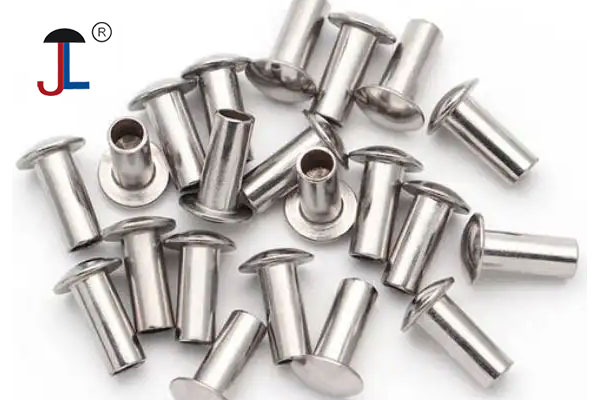
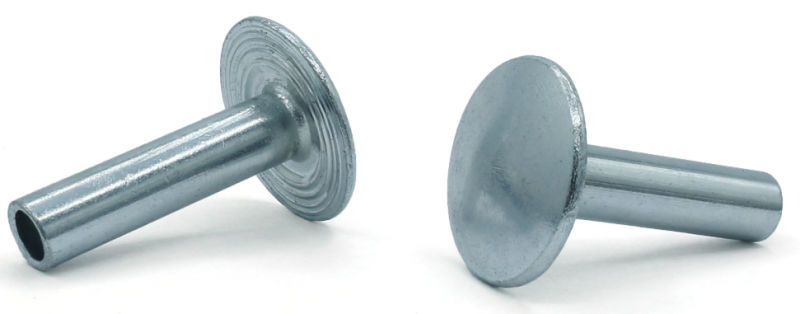
For semi-tubular and tubular rivets, a crucial secondary operation is drilling. The solid blank is precisely drilled to create the hole at the end of the shank. The depth and diameter of this hole are tightly controlled, as they determine how the rivet will clinch and set during installation. For other designs, a trimming operation may be used to create hexagonal or square heads, or a pointing operation may be required to shape the tip of the shank.
Threading and Knurling: Adding Functional Features
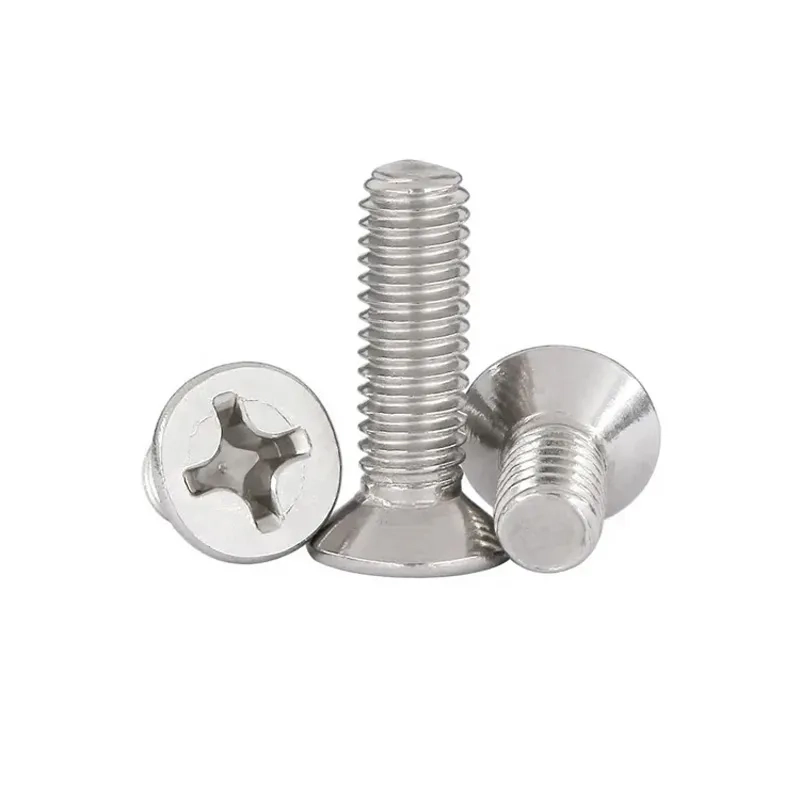
While most rivets are unthreaded, some specialized types, like rivet nuts or certain custom fasteners, require threads. Threading is typically done through a thread rolling process, where the rivet blank is rolled between two threaded dies. This process, like cold heading, is a cold-forming method that displaces material to form the threads rather than cutting them. This results in stronger, more durable threads with a superior surface finish.
Knurling, the process of creating a patterned texture on the shank, may also be performed. This feature is often added to increase grip when a rivet is pressed into a material, preventing it from rotating.
Enhancing Durability: Heat Treatment & Surface Finishing
A formed and shaped rivet isn’t necessarily a finished rivet. The final steps in the rivet production process are designed to lock in the desired mechanical properties and protect the part from its operational environment. These steps are critical for long-term performance and reliability.
Why is Heat Treatment or Annealing Necessary?
The cold heading process, while increasing strength, also introduces internal stresses into the material. For some applications, particularly with high-carbon or alloy steels, heat treatment is required to optimize the rivet’s properties. This can involve quenching and tempering to achieve a specific hardness and tensile strength.
Conversely, for some materials or applications, a process called annealing is used. This involves heating the rivets and allowing them to cool slowly, which relieves internal stresses and softens the metal. This is often necessary for rivets that need to be highly ductile for a specific setting process.
Plating and Coating: The Final Protective Layer
The final manufacturing step is often the application of a surface finish. This serves two primary purposes: corrosion resistance and aesthetics. Bare steel, for instance, will rust quickly if left unprotected. A protective coating acts as a barrier against moisture and other corrosive elements.
Common surface finishes include:
- Zinc Plating: A very common and cost-effective coating that provides good corrosion resistance. Often enhanced with a chromate passivation layer (clear, yellow, or black).
- Nickel Plating: Offers excellent wear resistance, hardness, and a bright, decorative finish.
- Black Oxide: A conversion coating that provides mild corrosion resistance and a deep black appearance, often used where dimensional changes cannot be tolerated.
- Anodizing: An electrochemical process used for aluminum that creates a hard, durable, and corrosion-resistant oxide layer. It can also be dyed in various colors.
The Uncompromising Final Stage: Quality Control and Inspection
A rivet is only as good as the process that created it, and quality cannot be inspected into a part—it must be built in at every stage. However, rigorous quality control and inspection are the final guarantee that every rivet leaving the facility meets or exceeds customer specifications and industry standards like IATF 16949 and ISO 9001.
Dimensional and Visual Checks: Is the Rivet Made to Spec?
Throughout the production run and upon completion, batches of rivets are systematically checked. High-precision tools like calipers, micrometers, and optical comparators are used to verify all critical dimensions: head diameter and height, shank length and diameter, hole depth (for semi-tubular rivets), and more. Automated optical sorting machines can inspect 100% of a batch for dimensional accuracy and visual defects like cracks or surface imperfections at incredible speeds.
Mechanical Testing: Ensuring Strength and Reliability
Beyond looking right, a rivet must perform right. Mechanical testing is conducted to validate the properties that matter in an application. This includes shear strength tests (measuring the force required to cut the rivet in half) and tensile strength tests (measuring the force required to pull it apart). These tests confirm that the raw material selection, cold forming, and any heat treatment have resulted in a rivet that can withstand its designed loads.
Sorting and Packaging: The Journey to the Customer
After passing all quality checks, the finished rivets are counted, weighed, and packaged according to customer requirements. Proper packaging is essential to protect the fasteners from damage and corrosion during shipping and storage. Clear labeling ensures full traceability back to the production lot, providing a complete quality record from raw material to finished product.
RivetJ L: Your Partner in Precision Manufacturing
As this detailed journey shows, manufacturing a seemingly simple rivet is a complex science. Every step, from material chemistry to the final coating, is a critical control point that influences the final product’s quality and reliability. A single faulty rivet can compromise the integrity of an entire assembly, making the choice of your manufacturing partner paramount.
At RivetJ L, we have mastered this process. Our commitment to using premium raw materials, leveraging state-of-the-art cold heading technology, and implementing rigorous, multi-stage quality control ensures that every rivet we deliver is built for performance. When you partner with us, you aren’t just buying a fastener; you’re investing in the expertise and precision that guarantee your project’s success. Contact our engineering team today to discuss your specific rivet requirements.