When choosing between copper and brass fasteners, the decision hinges on your primary application requirement. For unparalleled electrical conductivity, pure copper fasteners are the superior choice, making them essential for high-performance electrical systems. However, brass fasteners offer significantly greater durability, mechanical strength, and corrosion resistance at a more accessible price point, establishing them as the more versatile and robust option for most structural and general-purpose applications. Understanding this fundamental trade-off is critical for engineers, designers, and manufacturers when specifying materials for critical components. This guide provides an in-depth analysis to help you select the ideal fastener for your project’s unique demands, balancing performance with practicality.
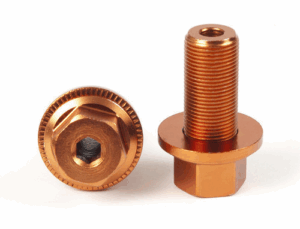
Table of Contents
- Understanding the Core Materials: What is Copper vs. What is Brass?
- Head-to-Head Comparison: Copper vs. Brass at a Glance
- Deep Dive: Electrical Conductivity Explained
- Analyzing Durability and Mechanical Strength
- Beyond the Basics: Other Critical Factors in Your Decision
- Application-Specific Recommendations: When to Choose Copper or Brass
- Conclusion: Making the Right Choice for Your Project
- Frequently Asked Questions (FAQ)
Understanding the Core Materials: What is Copper vs. What is Brass?
Before diving into a direct comparison, it’s crucial to understand the fundamental nature of each material. Their composition is the root cause of all their differing properties, from conductivity to strength. One is a pure element, while the other is a carefully engineered alloy.
The Elemental Purity of Copper (Cu)
Copper is a pure chemical element with the symbol Cu. It is a soft, malleable, and ductile metal known for its distinctive reddish-brown color. Its most celebrated property is its exceptional electrical and thermal conductivity, second only to silver among pure metals. This purity means its atomic structure is uniform, allowing electrons to flow through it with minimal resistance. However, this same purity also makes it relatively soft, meaning it can deform easily under mechanical stress, which is a significant consideration for fastening applications.
The Alloyed Strength of Brass (Cu-Zn)
Brass is not a pure element; it is an alloy primarily composed of copper and zinc (Zn). Different types of brass exist, with varying proportions of copper and zinc, and sometimes with small amounts of other elements like lead or aluminum to enhance specific properties. The addition of zinc atoms disrupts copper’s uniform crystal lattice. This disruption is key: it makes the material harder, stronger, and more resistant to deformation than pure copper. This enhanced durability is precisely why brass was developed and remains a popular material for hardware and fittings.
Head-to-Head Comparison: Copper vs. Brass at a Glance
For a quick overview, this table summarizes the key differences between copper and brass fasteners. This allows for an easy-to-digest comparison before we explore each attribute in greater detail.
| Attribute | Copper Fasteners | Brass Fasteners |
|---|---|---|
| Composition | Pure Element (Cu) | Alloy of Copper (Cu) and Zinc (Zn) |
| Electrical Conductivity | Excellent (100% IACS standard) | Good (Typically 25-40% IACS) |
| Durability / Strength | Low (Soft and Malleable) | Excellent (Harder and Stronger) |
| Corrosion Resistance | Good (Forms a protective green patina) | Excellent (Especially against water/brine) |
| Machinability | Poor (Gummy and difficult to machine) | Excellent (Easy to cut and shape) |
| Cost | Higher | Lower |
| Appearance | Reddish-Brown / Pinkish-Orange | Yellowish-Gold |
Deep Dive: Electrical Conductivity Explained
The primary reason for choosing copper in any electrical context is its phenomenal ability to conduct electricity. But how much better is it than brass, and why does this difference exist?
Why Copper is the Benchmark for Electrical Performance
Pure annealed copper is so effective at conducting electricity that it serves as the international standard. The International Annealed Copper Standard (IACS) sets pure copper’s conductivity at 100%. Its atomic structure allows for an effortless flow of electrons, minimizing energy loss in the form of heat. In applications like high-fidelity audio equipment, sensitive scientific instruments, or high-power electrical busbars, this minimal resistance is not just beneficial—it’s mandatory. Using a less conductive material would lead to performance degradation, signal loss, and inefficient power transmission.
How Zinc Impedes Brass’s Electrical Flow
When zinc is added to copper to create brass, the zinc atoms scatter the flow of electrons. Think of it as placing obstacles on a clear highway. While traffic (current) can still get through, it is significantly impeded. As a result, the electrical conductivity of brass drops dramatically, typically to a range of 25% to 40% IACS. While this is still far more conductive than steel or aluminum, it is a significant step down from pure copper. For many electrical terminals and connectors where mechanical strength is just as important as conductivity, this level is perfectly acceptable. But for applications demanding peak electrical efficiency, brass is not a suitable substitute for copper.
Analyzing Durability and Mechanical Strength
While copper wins on conductivity, the tables turn completely when we assess mechanical properties. The very alloying process that hinders brass’s conductivity gives it a substantial advantage in strength and durability.
The Softness of Copper: A Double-Edged Sword
Copper’s softness and malleability are beneficial when it needs to be drawn into wires or bent into complex shapes. However, for a fastener, this is a major drawback. Copper screws and bolts are susceptible to stripping, sheering, and stretching under high torque or heavy loads. They are not suitable for structural applications where clamping force and resistance to vibration are critical. Their use is limited to situations where the electrical connection is the sole purpose, and mechanical stress is minimal.
The Robustness of Brass: Built for Mechanical Stress
Brass is significantly harder, stronger, and has a higher tensile strength than copper. The zinc within its structure provides the rigidity that pure copper lacks. This makes brass fasteners far more durable and reliable for securing components. They can be tightened to a higher torque without stripping the threads or breaking the head, and they hold up better against vibration and physical wear and tear. This is why you see brass used for everything from plumbing fittings and marine hardware to sturdy nuts and bolts—applications where failure is not an option.
Beyond the Basics: Other Critical Factors in Your Decision
The choice between copper and brass fasteners goes beyond just conductivity and durability. Manufacturing processes, environmental conditions, and project budget all play a vital role.
Corrosion Resistance: Which Withstands the Elements Better?
Both materials boast excellent corrosion resistance, but they excel in different ways. Copper is famous for developing a characteristic blue-green patina (verdigris) when exposed to the elements. This patina is a form of self-protection, sealing the metal underneath from further corrosion. Brass, thanks to its zinc content, exhibits superior resistance to corrosion caused by water, especially saltwater. This makes it a premier choice for marine applications, plumbing, and outdoor hardware where constant moisture is a factor.
Machinability and Manufacturing Efficiency
This is a critical factor from a production standpoint. Pure copper is notoriously difficult to machine; its softness makes it “gummy,” causing it to clog cutting tools and result in a poor surface finish. In contrast, brass is known for its excellent machinability. It produces fine chips when cut, allowing for faster machining speeds, longer tool life, and smoother finishes. This ease of manufacturing translates directly into lower production costs and higher precision for complex fastener designs.
Cost-Effectiveness and Project Budgeting
As a pure industrial metal traded on the commodities market, copper prices can be volatile and are generally higher than brass. Brass, being an alloy made from more affordable zinc mixed with copper, is almost always the more cost-effective option. For large-scale projects requiring thousands of fasteners, this price difference can have a substantial impact on the overall budget.
Aesthetic and Visual Differences
Finally, appearance can be a deciding factor in decorative or architectural applications. Copper has a warm, reddish-brown metallic luster that is highly sought after. Brass offers a bright, yellowish, gold-like appearance that can be polished to a high shine. The choice here is purely subjective and depends on the desired design outcome.
Application-Specific Recommendations: When to Choose Copper or Brass
With a full understanding of their properties, we can now make clear recommendations for their use.
Ideal Use Cases for High-Purity Copper Fasteners
Choose copper fasteners when the primary, non-negotiable requirement is maximum electrical conductivity.
- Electrical grounding lugs and terminals
- Busbar connections in power distribution panels
- Fasteners within high-frequency electronics and RF shielding
- Heat sinks and thermal management components
- Sensitive scientific and audio equipment
Where Versatile Brass Fasteners Excel
Choose brass fasteners when you need a balance of good conductivity, high mechanical strength, corrosion resistance, and cost-effectiveness.
- General-purpose electrical connectors and switchgear
- Plumbing and pipe fittings
- Marine hardware and boat fittings
- Decorative hardware, locks, and hinges
- Nuts, bolts, and screws for musical instruments and machinery
- Applications requiring non-sparking properties
Conclusion: Making the Right Choice for Your Project
The debate of copper vs. brass fasteners is not about finding a single “better” material, but about selecting the right material for the job. Your decision should be a direct reflection of your project’s top priority.
If your application lives or dies by the efficiency of its electrical current, and mechanical stress is a secondary concern, copper is your only choice. Its unmatched conductivity is essential for high-performance systems.
For nearly every other scenario, where a combination of strength, longevity, corrosion resistance, and reasonable cost is needed, brass is the superior and more practical solution. Its balanced profile makes it a reliable and durable workhorse for an immense range of fastening applications, from industrial machinery to decorative hardware.
Frequently Asked Questions (FAQ)
1. Can I use brass fasteners for home electrical wiring?
Yes, brass screws are commonly used in electrical outlets, light switches, and terminals. While not as conductive as pure copper, their conductivity is more than sufficient for standard residential voltages, and their superior strength prevents the screws from stripping during installation.
2. Which is more resistant to rust?
Neither copper nor brass contains iron, so they do not “rust” in the traditional sense (forming iron oxide). Both are highly corrosion-resistant. Brass is generally better in wet and marine environments, while copper forms a protective green patina over time.
3. Why is brass used for musical instruments instead of copper?
Brass is used for instruments like trumpets and trombones due to a combination of its acoustic properties, which produce a bright and resonant tone, and its durability and workability, which allow it to be shaped into complex forms and withstand handling.