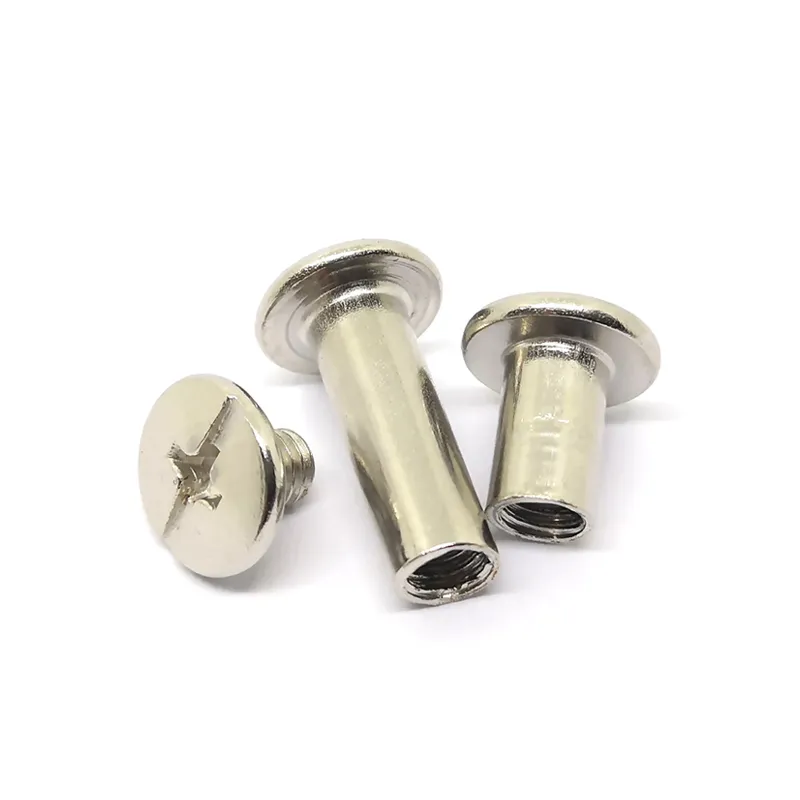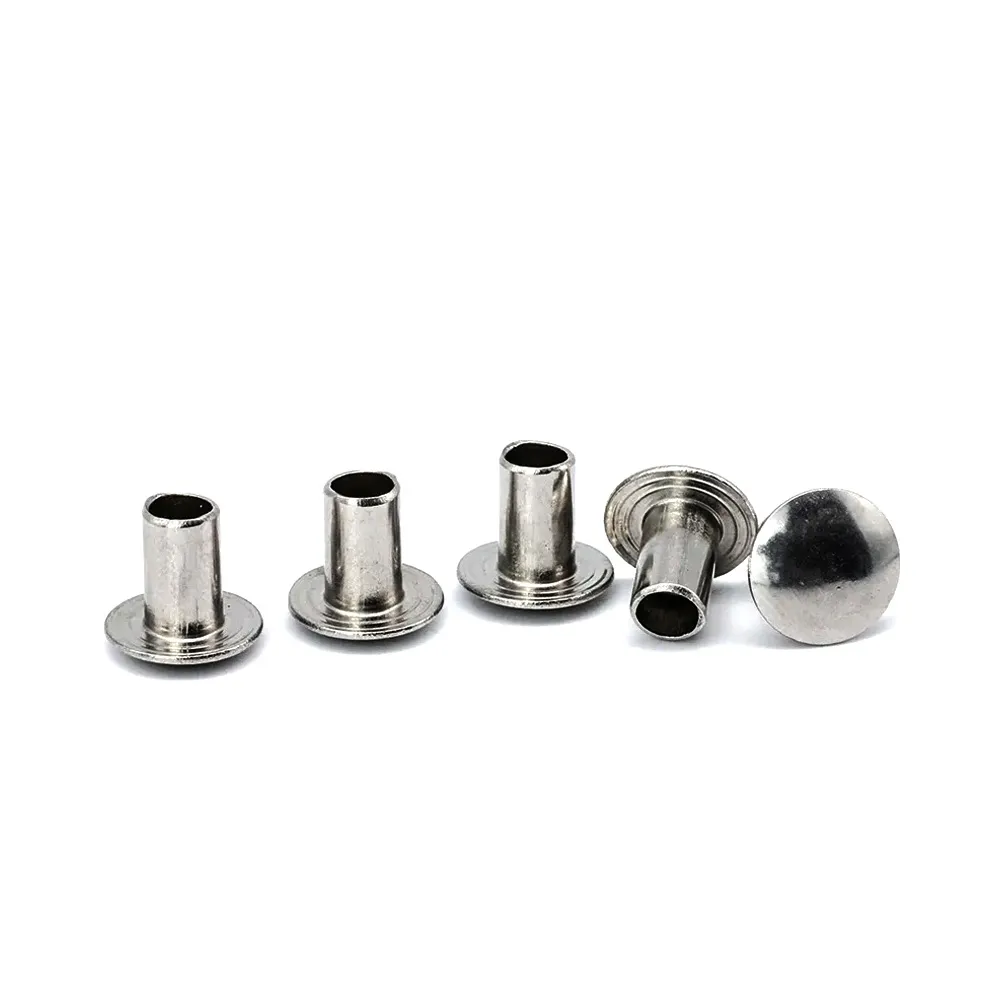
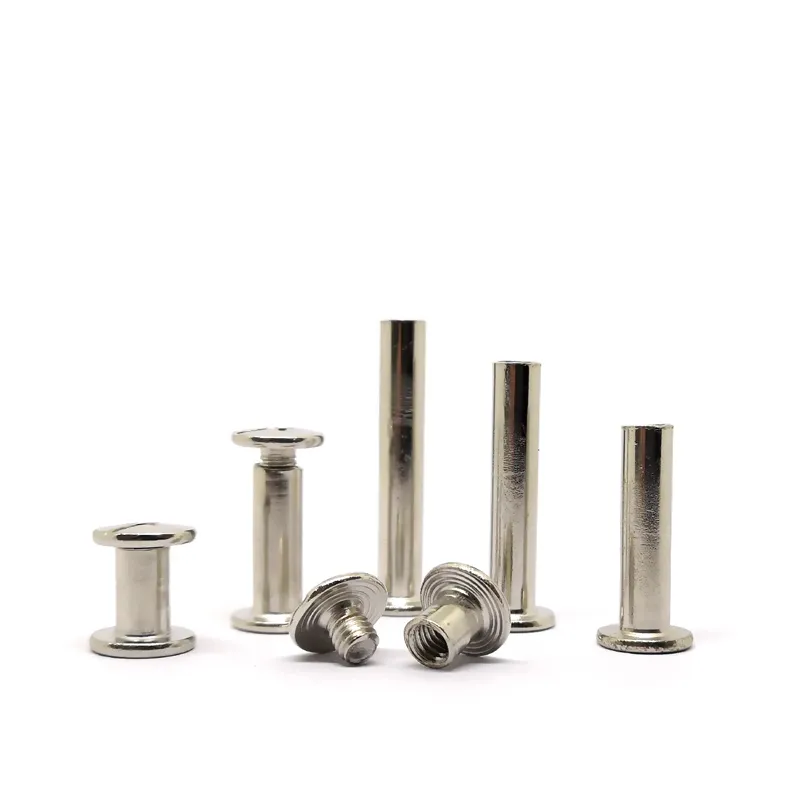
Point-loading destroys composite materials through delamination and fiber breakage. Ignoring stress concentrations leads to catastrophic structural failure. Male-female rivets tightly fill clearance holes, creating a continuous load transfer path that distributes mechanical stress evenly across the joint, preserving the structural integrity of the composite panel.
Transitioning from traditional isotropic metals to anisotropic carbon fiber or fiberglass introduces immense fastening challenges. While a steel plate will yield and stretch around a highly stressed bolt, a composite panel will simply shatter or tear apart at the layers. At Dongguan Jiliang Machinery Hardware, we’ve learned that mitigating these kinetic stress concentrations requires a fastener designed to interact firmly but uniformly with the substrate. Here is an engineering deep-dive into how two-piece riveting systems manage complex loads in advanced materials.
Table of Contents
- How Do Composites React to Fastener Stress Concentrations?
- What Is the Load Transfer Mechanism of Male-Female Rivets?
- Can Multi-Rivet Configurations Optimize Load Distribution?
- How Do These Fasteners Perform in Aerospace Composite Structures?
- Are Male-Female Rivets Effective for Composite-to-Metal Hybrid Joints?
- How Does Fastener Head Geometry Protect the Outer Laminates?
- Why Choose Mechanical Fastening Over Pure Adhesive Bonding?
1. How Do Composites React to Fastener Stress Concentrations?
Understanding the failure modes of composite materials under mechanical clamping is the foundational step for any joint design.
Composite materials lack the ductility of metals, making them highly sensitive to localized stress. When clamped unevenly by standard fasteners, the localized pressure causes matrix cracking and interlaminar delamination, drastically reducing the overall fatigue life and load-bearing capacity of the joint.
Failure Modes and Mechanical Vulnerabilities
Unlike aluminum or steel, which possess isotropic properties (equal strength in all directions), carbon fiber reinforced polymers (CFRP) and fiberglass are anisotropic. Their strength is heavily directional, relying entirely on the continuous resin matrix and fiber orientation.
When a traditional threaded screw is driven into a composite panel, the sharp threads create microscopic stress risers inside the hole. Furthermore, if the clamping force is uneven, the kinetic load is concentrated on a single point of the hole wall. Because the composite cannot plastically yield to relieve this stress, the fibers begin to shear.
- Matrix Cracking: The initial failure where the resin holding the fibers together micro-fractures under point-loading.
- Interlaminar Delamination: The catastrophic separation of the composite layers, often caused by the radial expansion of inappropriate fasteners (like standard blind rivets) crushing the inner walls of the drilled hole.
- Engineering Fix: The fastener must provide a smooth, continuous bearing surface to ensure the kinetic energy is absorbed uniformly by the entire circumference of the hole.
2. What Is the Load Transfer Mechanism of Male-Female Rivets?
The physical geometry of the fastener shank directly dictates how kinetic energy flows from one composite plate to the next.
Male-female rivets tightly fill the drilled hole, utilizing a solid smooth barrel that establishes a continuous, physical interlock. This design transfers shear and tensile loads evenly across the entire bearing surface of the composite hole, significantly reducing localized stress concentrations.
The Solid Barrel Advantage in Load Pathways
In a composite joint, the primary method of transferring shear loads (forces pulling the plates in opposite directions) is through the bearing contact between the fastener shank and the hole wall.
A traditional bolt has threads that can dig into the composite matrix, causing rapid degradation. A male-female rivet (binding post) features a smooth, continuous female barrel that passes entirely through the shear plane.
- Hole Filling: By machining the barrel to tight tolerances (e.g., an H7 clearance fit), the fastener minimizes the gap between the metal and the composite. When a load is applied, the fastener engages the entire wall simultaneously, rather than slamming into one side.
- Continuous Load Path: Because the two halves physically thread or press into each other to form a solid pillar, there is no weak point at the shear interface. The kinetic energy travels smoothly from the top plate, through the solid barrel, and into the bottom plate, virtually eliminating the high-stress nodal points that trigger fiber tear-out.
3. Can Multi-Rivet Configurations Optimize Load Distribution?
A single fastener rarely bears the entire structural load in modern industrial or aerospace designs; arrays are required.
In multi-rivet composite structures, load distribution is directly controlled by rivet arrangement, pitch, and edge spacing. Engineering these parameters correctly allows male-female rivets to share the kinetic load symmetrically, preventing any single high-stress zone from initiating a composite fracture.
Pitch, Spacing, and Array Design Optimization
When designing a multi-fastener joint, engineers must carefully calculate the pitch (distance between rivet centers), the edge margin (distance from the hole to the edge of the panel), and the plate width. In composite-to-composite assemblies, the first and last rows of rivets typically bear the highest proportion of the load.
Engineering research demonstrates that load distribution patterns shift dramatically based on rivet position and quantity. By utilizing the uniform clamping force of male-female rivets, engineers can manipulate the joint geometry to force the inner rivets to take on more load, flattening the stress curve.
Table 1: Multi-Rivet Design Parameters for Composites
| Design Parameter | Impact on Composite Load Distribution | Optimal Strategy for Male-Female Rivets |
| Pitch (Spacing) | Too close causes overlapping stress zones; too far causes plate buckling. | Maintain 3D to 5D (Diameter) spacing to ensure independent load transfer. |
| Edge Distance (e/D) | Insufficient distance leads to catastrophic shear-out (edge bursting). | Specify a minimum 2.5D to 3D edge margin to protect the brittle resin matrix. |
| Hole Clearance | Loose holes force a single rivet to bear 100% of the initial load. | Use precision-machined barrels for a transition fit, ensuring simultaneous load sharing. |
4. How Do These Fasteners Perform in Aerospace Composite Structures?
The aerospace sector demands the highest strength-to-weight ratios available, pushing composite fastening technologies to their absolute limits.
Aerospace fuselage and wing assemblies utilize precision rivet connections to optimize load distribution across carbon fiber panels. By strictly controlling the clamping force and fastener pitch, these systems maximize structural bearing capacity and drastically extend the critical fatigue life of the aircraft.
Aerospace Safety and Fatigue Life Extension
In modern commercial aircraft, up to 50% of the airframe is constructed from CFRP. In high-stress areas like the wing root or the fuselage lap splices, engineers cannot rely solely on adhesives due to the risk of catastrophic peel under dynamic flight loads.
Male-female style fasteners are widely adopted in these critical zones. The fastener’s ability to be torqued or pressed to a highly specific clamping force prevents the crushing of the honeycomb or solid laminate structures. By optimizing the rivet pitch along the fuselage stringers, the aerodynamic loads are dispersed over thousands of fasteners. This prevents fatigue cracking—a phenomenon where cyclic loading causes micro-fissures to grow into major structural failures over years of flight pressurization cycles.
5. Are Male-Female Rivets Effective for Composite-to-Metal Hybrid Joints?
Joining dissimilar materials creates unique thermal expansion and mechanical bearing challenges that standard hardware cannot solve.
Male-female rivets effectively transfer loads across the composite-to-metal interface without crushing the softer layer. Testing demonstrates that these joints achieve highly stable peak loads, such as approximately 707 N per rivet, proving their capability to handle distinct mechanical contributions.
Bridging the Gap Between Metal and Fiber
One of the most common applications we see at Jiliang is the fastening of aluminum alloy brackets to fiberglass or carbon fiber panels (e.g., automotive chassis components or marine bulkheads). The stiffness mismatch between aluminum and CFRP means that under load, the materials want to bend and shear at different rates.
When an aluminum plate is bolted to a composite plate, the hard metal can act like a guillotine against the softer composite hole wall. Male-female rivets solve this by utilizing a rigid, load-bearing barrel that houses the shear plane entirely within the metal fastener, isolating the composite from the sharp shearing action. Experimental data on CFRP-to-Aluminum hybrid joints confirms that rivet-style connections bear explicit, measurable load contributions (often exceeding 700+ Newtons of shear force per 5mm fastener) while maintaining structural harmony at the interface.
Table 2: Composite-to-Metal Interface Dynamics
| Interface Challenge | Risk with Standard Bolts | Solution via Male-Female Rivets |
| Stiffness Mismatch | Bolt tilting damages the composite hole wall. | Solid barrel resists tilting, keeping the shear plane stable. |
| Galvanic Corrosion | Carbon fiber corrodes standard steel fasteners. | Available in Passivated Stainless Steel or Titanium alloys. |
| Thermal Expansion | Metal expands faster, cracking the composite. | Controlled clamp load allows for microscopic thermal slip. |
6. How Does Fastener Head Geometry Protect the Outer Laminates?
The bearing surface of the fastener head is just as critical for composite survival as the shank inside the hole.
Wide, low-profile heads on male-female rivets distribute the axial clamping load over a larger surface area of the composite panel. This prevents the fastener from crushing the outer resin matrix and fibers, preserving the structural integrity and aesthetic of the topmost laminates.
Surface Protection and Pull-Through Resistance
When a joint is placed under tensile load (pulling the plates apart), the force attempts to pull the rivet head directly through the material. Because composite materials are built in layers, excessive pressure on the top layer can crush the resin and push the fibers inward, severely compromising the board’s strength.
Standard screws often have small, angled heads that concentrate pressure into a tiny ring. Male-female rivets are typically manufactured with wide, flat truss heads or low-profile pan heads. This wide footprint acts like a built-in washer, distributing the PSI (pounds per square inch) over a massive area. This guarantees that the joint will achieve its maximum tensile rating without the fastener head punching through the top layer of the carbon fiber.
7. Why Choose Mechanical Fastening Over Pure Adhesive Bonding?
Adhesives are highly popular in composite manufacturing, but they lack predictability under certain dynamic environmental loads.
While adhesive bonding offers high static strength, male-female rivets provide superior stability and predictable load transfer under dynamic shock. Mechanical interlocks prevent catastrophic peel failure, ensuring the composite joint remains intact even if the primary adhesive layer begins to degrade.
The Hybrid Approach (Co-Curing and Fastening)
Although experimental data shows that the static peak load of a purely riveted composite joint is generally lower than a perfectly executed adhesive bond, the load transfer method of a mechanical rivet is vastly more stable and predictable over time.
Adhesives are notoriously weak against “peel” forces (forces that pull the plates apart at an angle) and can degrade rapidly due to moisture ingress, UV exposure, or severe temperature fluctuations. For load-critical structures, engineers use a hybrid approach. They apply structural adhesive to distribute the static load, and then install male-female rivets at strategic intervals. The rivets act as “peel-stoppers,” mechanically locking the plates together so that even if the adhesive bond sustains a micro-crack, the crack cannot propagate, and the joint retains its structural integrity.
Conclusion
Fastening composite materials is an unforgiving engineering challenge. The anisotropic nature of carbon fiber and fiberglass means that a single stress concentration can lead to total component failure. By utilizing the continuous load path, hole-filling capability, and wide bearing surface of Male-Female Rivets, manufacturers can drastically improve load distribution across the joint.
Whether you are designing a lightweight automotive chassis or an aerospace wing assembly, optimizing your rivet array is the key to maximizing fatigue life.
Are you struggling with composite delamination or joint failure in your prototypes?
Contact the engineering team at Dongguan Jiliang Machinery Hardware. We can review your composite stack-up and recommend a precision-machined male-female rivet solution designed to protect your matrix and optimize your load transfer.
[Request a Composite Fastening Consultation]
Frequently Asked Questions (FAQ)
1. Do male-female rivets cause delamination during installation?
No, provided the hole is drilled cleanly. Unlike blind rivets that expand radially and crush the inner walls of the hole, male-female rivets do not expand outward. They slip into the clearance hole and clamp vertically, which is highly protective of composite layers.
2. What is the correct hole tolerance for composite riveting?
To achieve optimal load distribution, the hole should be a “transition fit” or a very tight clearance fit. Excessive gap allows the plates to slip, causing the fastener to slam into the hole wall under dynamic load, which damages the composite fibers.
3. Should I use a countersunk head on composite materials?
It is generally discouraged unless the composite panel is exceptionally thick. Countersinking cuts through the continuous top layers of the carbon fiber, significantly weakening the material. It is much safer to use a low-profile protruding head.
4. What materials are best for male-female rivets in CFRP?
Carbon Fiber Reinforced Polymer (CFRP) is highly cathodic, meaning it will cause galvanic corrosion in aluminum and standard steel. For CFRP, you must specify Stainless Steel (316) or Titanium male-female rivets.
5. How do multi-rivet arrays improve joint strength?
Multiple fasteners divide the total kinetic load. By carefully spacing them out, no single hole in the composite bears the full brunt of the shear force, keeping the localized stress below the ultimate yield strength of the resin matrix.
6. Can I use these rivets alongside structural adhesives?
Absolutely. This is called a “hybrid joint.” The adhesive handles the widespread static shear load, while the male-female rivets prevent peeling and provide a fail-safe mechanical lock if the adhesive degrades over time.
7. Do I need to apply specific torque to the threaded versions?
Yes. If you are using a screw-type male-female rivet, you must use a torque-limiting driver. Over-torquing will crush the composite matrix, while under-torquing allows the plates to slip. The torque should be calculated based on the compressive strength of your specific composite laminate.