Absolutely. High-quality machine screws can and do consistently meet the most stringent export and industrial quality requirements. However, this level of quality is not a given; it is the result of a deliberate and controlled process encompassing adherence to specific international standards, meticulous material selection, precision manufacturing techniques, and a robust, multi-stage quality assurance system. For engineers, procurement managers, and manufacturers, understanding these critical factors is the key to sourcing fasteners that guarantee safety, reliability, and global compliance.
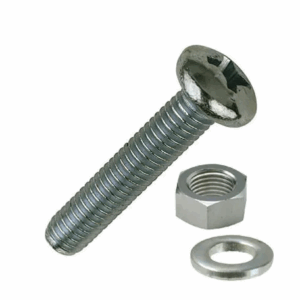
In today’s global marketplace, a simple machine screw is rarely just a screw. In an automotive assembly, it’s a critical safety component. In sophisticated electronics, it’s an essential part of a product’s longevity and regulatory compliance. When products are exported, these small components must meet a complex web of international rules. This guide will provide an in-depth look at what separates a standard screw from one that is truly “industrial-grade” and “export-ready,” empowering you to make informed decisions for your most critical applications.
Table of Contents
- What Defines “Industrial” and “Export” Quality for Machine Screws?
- Navigating the Maze of International Quality Standards
- The Foundation of Quality: Material Selection and Properties
- The Critical Role of Coatings and Finishes
- From Raw Material to Final Product: The Manufacturing Process Matters
- How to Verify Screw Quality: The Inspection and Testing Process
- Choosing the Right Partner: What to Look for in a Machine Screw Supplier
- Conclusion: Achieving Export and Industrial Quality is a Deliberate Process
What Defines “Industrial” and “Export” Quality for Machine Screws?
The distinction between a standard, off-the-shelf screw and one built for industrial or export applications lies in proven consistency and verifiable compliance. While a hardware store screw may function adequately for a home project, it lacks the traceability and guaranteed performance characteristics required in a manufacturing environment where thousands of units must be identical and flawless.
For industrial quality, the focus is on mechanical performance, durability, and reliability under specific operational stresses. The high stakes of fastener failure—which can lead to equipment damage, production downtime, and safety hazards—mean that industrial-grade screws must have predictable and certified properties, such as tensile strength, hardness, and shear strength. There is no room for variation or deviation from the engineering specification.
For export quality, the requirements expand to include international compliance. This involves adhering to the destination country’s dimensional standards (e.g., metric vs. imperial), environmental regulations (like RoHS and REACH in Europe, which restrict hazardous substances), and providing comprehensive documentation. Export-ready fasteners require a clear paper trail, including material certifications and inspection reports, to ensure smooth customs clearance and legal market entry.
Navigating the Maze of International Quality Standards
Standards are the universal language of quality in the fastener industry. They provide a clear framework for manufacturers, suppliers, and end-users to communicate and verify technical specifications. A manufacturer’s ability to produce screws compliant with these standards is a primary indicator of their capability to deliver export and industrial-grade products.
The “Big Three”: Understanding ISO, ANSI/ASME, and DIN
While numerous national and industry standards exist, three bodies form the cornerstone of global fastener specifications. Understanding their roles is crucial for sourcing compliant machine screws.
- ISO (International Organization for Standardization): As the global benchmark, ISO standards are recognized worldwide, making them the default choice for products with a global market. For fasteners, this includes specifications for dimensions, threads (e.g., ISO metric screw thread), and mechanical properties. Critically, the ISO 9001 standard outlines the requirements for a Quality Management System (QMS), a key certification for any reputable manufacturer.
- ANSI/ASME (American National Standards Institute / American Society of Mechanical Engineers): These are the predominant standards in North America. They define Unified Thread Standard (UTS) specifications like UNC (coarse) and UNF (fine), as well as dimensions for various head types and drive styles. If your product is destined for the US market, specifying compliance with the relevant ANSI/ASME B18 series is essential.
- DIN (Deutsches Institut für Normung): The German national standard has historically been very influential across Europe. While many DIN fastener standards are gradually being replaced by their ISO equivalents (e.g., DIN 965 is now largely superseded by ISO 7046 for countersunk screws), many specifications and drawings still reference DIN numbers. A knowledgeable supplier can cross-reference between DIN and ISO standards.
Here is a simplified comparison of how these standards might define a similar screw:
| Attribute | ISO (Metric) | ANSI/ASME (Imperial) | Common DIN Reference |
|---|---|---|---|
| Product Example | Pan Head Phillips Machine Screw | Pan Head Phillips Machine Screw | Linsenkopfschraube mit Kreuzschlitz |
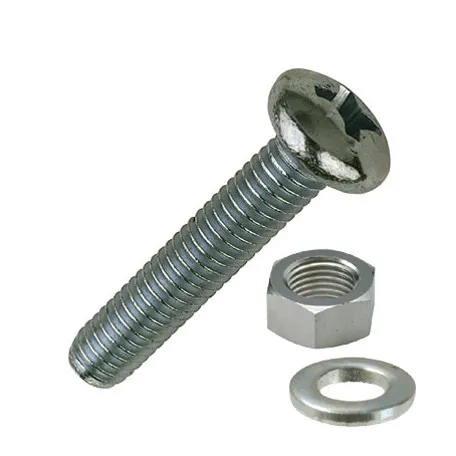
| Standard Number | ISO 7045 | ASME B18.6.3 | DIN 7985 |
| Thread Designation | M4 x 0.7 | #8-32 UNC | M4 |
| Property Class / Grade | Class 4.8, 8.8 | Grade 2, 5 | Klasse 4.8, 8.8 |
Industry-Specific Standards: Why One Size Doesn’t Fit All
Beyond the general standards, many industries have their own stringent quality systems and regulations that directly impact fastener requirements.
- Automotive (IATF 16949): This global standard for automotive quality management is one of the most demanding. It mandates strict process controls, full traceability, and extensive documentation through processes like the Production Part Approval Process (PPAP). Any screw used in a vehicle’s assembly must come from an IATF 16949-compliant supply chain.
- Aerospace (AS9100): This standard builds upon ISO 9001 with additional requirements for safety, reliability, and risk management critical to the aerospace industry. Fasteners for this sector undergo extreme scrutiny and testing.
- Electronics (RoHS and REACH): The Restriction of Hazardous Substances (RoHS) directive restricts the use of specific hazardous materials (like lead, mercury, and cadmium) in electrical and electronic products. Registration, Evaluation, Authorisation and Restriction of Chemicals (REACH) is a broader European regulation concerning chemical substances. Exporting electronics to the EU requires that all components, including screws and their coatings, are RoHS and REACH compliant.
The Foundation of Quality: Material Selection and Properties
The choice of raw material is a non-negotiable foundation of a machine screw’s performance. A screw made from an incorrect or low-quality alloy will fail, regardless of how well it is manufactured. An expert supplier will guide you to the optimal material based on your application’s requirements for strength, corrosion resistance, temperature, and cost.
Common Materials for Industrial Machine Screws
- Carbon Steel: The workhorse of the fastener world. It’s cost-effective and can be heat-treated to achieve a wide range of strength levels. Common grades like 1018 or 1022 steel are used for standard screws, while heat-treated medium-carbon steels are used for higher-strength applications (e.g., Class 8.8 or Grade 5).
- Alloy Steel: By adding elements like chromium, molybdenum, or nickel, alloy steels achieve superior strength, toughness, and temperature resistance compared to carbon steels. They are used in highly demanding applications like automotive engines or heavy machinery.
- Stainless Steel: The primary choice for corrosion resistance. Grade 304 (A2) is the most common, offering excellent protection in most environments. For applications exposed to chlorides (like marine or coastal environments) or harsh chemicals, Grade 316 (A4), with its added molybdenum, is the superior choice.
- Brass and Aluminum: These non-ferrous metals are used in specific applications. Brass is electrically conductive and corrosion-resistant, making it suitable for electrical components. Aluminum is lightweight and corrosion-resistant, ideal for applications where weight is a critical factor.
How Do Material Properties Impact Performance?
When an engineer specifies a material, they are really specifying a set of mechanical properties. The most critical include:
- Tensile Strength: The maximum pulling or stretching force a screw can withstand before breaking. This is arguably the most important measure of a screw’s strength.
- Hardness: The material’s ability to resist surface indentation and abrasion. A harder screw is more resistant to wear and deformation, especially in its threads and drive recess.
- Ductility: The ability of a material to deform under tensile stress before fracturing. A ductile screw will bend or stretch before it snaps, providing a warning of overload, whereas a brittle screw can fail suddenly and catastrophically.
The Critical Role of Coatings and Finishes
A coating, or plating, is far more than a cosmetic feature; it’s a functional surface treatment that is critical to a machine screw’s performance and lifespan, especially in industrial and export contexts.
Why Are Coatings More Than Just Cosmetic?
For carbon steel screws, the primary function of a coating is to provide a barrier against moisture and oxygen, thus preventing rust. This is known as sacrificial protection, where the coating (like zinc) corrodes first, sacrificing itself to protect the steel underneath. Beyond corrosion resistance, coatings can also reduce friction for easier installation, increase surface hardness for better wear resistance, and provide color for identification.
Choosing the Right Plating for Your Application
- Zinc Plating: The most common and cost-effective anti-corrosion coating. It is often followed by a chromate conversion coating, which can be clear (blueish), yellow, or black, each offering slightly different levels of corrosion protection. Yellow chromate traditionally offered the best performance, but modern trivalent clear chromates can now match it without the environmentally sensitive hexavalent chromium.
- Nickel Plating: Offers excellent wear resistance and good corrosion protection, along with a bright, decorative finish. It is often used in electronics and applications requiring a clean appearance.
- Phosphate & Oil: A dark grey or black finish that provides moderate corrosion resistance and excellent paint adhesion. It’s a low-cost industrial finish often used when parts will be painted or kept in a protected, oily environment.
- Passivation: This is not a coating but a chemical treatment process for stainless steel. It removes free iron from the surface and forms a passive, non-reactive oxide layer that significantly enhances the steel’s natural corrosion resistance.
From Raw Material to Final Product: The Manufacturing Process Matters
The methods used to form the screw have a profound impact on its final strength and consistency. Top-tier manufacturers utilize processes that enhance the material’s inherent properties.
Precision in Production: Cold Heading and Thread Rolling
Industrial-grade screws are not made by cutting away material, which would sever the grain structure of the metal and create weak points. Instead, they are formed using two key processes:
- Cold Heading (or Cold Forming): A coil of wire is fed into a machine, sheared to a precise length, and then forced into a series of dies at high speed and pressure. This forms the head and shank of the screw without heating the material. This process forces the metal’s grain structure to flow along the contour of the head, making it significantly stronger and more resistant to shear forces than a machined head.
- Thread Rolling: After the head is formed, the blank screw is rolled between two hardened steel dies that press the thread shape into the shank. This process displaces the material rather than cutting it, which compacts and work-hardens the thread roots. The result is threads that are stronger, smoother, and more resistant to stripping and fatigue failure compared to machine-cut threads.
The Importance of a Documented Quality Management System (QMS)
A quality product is the result of a quality process. A reputable manufacturer operates under a certified Quality Management System (QMS), such as ISO 9001. A QMS ensures that every step of the process is controlled, monitored, and documented. This provides complete traceability—the ability to track a specific batch of screws all the way back to the original coil of steel it was made from. This is indispensable for quality control, problem resolution, and meeting the documentation requirements for export and industries like automotive.
How to Verify Screw Quality: The Inspection and Testing Process
Claims of quality are meaningless without proof. A reliable supplier must have the in-house capability or third-party validation to perform a comprehensive suite of tests to verify that a batch of screws meets the specified standards.
Key Mechanical and Dimensional Tests
These tests confirm the screw’s physical and mechanical integrity. A manufacturer should be able to provide reports for these upon request.
- Dimensional Inspection: Using tools like digital calipers, micrometers, and sophisticated optical comparators to ensure all dimensions (length, head diameter, thread pitch, etc.) are within the tight tolerances defined by the standard.
- Tensile Strength Testing: A screw is pulled in a specialized machine until it breaks to confirm it meets the required strength.
- Proof Load Testing: A screw is subjected to a specific tensile load (usually around 90% of its yield strength) and must not show any permanent elongation after the load is removed. This proves it can handle its rated working load.
- Hardness Testing (Rockwell or Vickers): A small indentation is made on the screw’s surface (e.g., the head or the end of the shank) to measure its resistance to deformation, verifying proper heat treatment.
Verifying Coating and Material Integrity
These tests confirm the material composition and the performance of the protective coating.
- Salt Spray Test (e.g., ASTM B117): Finished screws are placed in a standardized salt fog chamber to simulate an accelerated corrosive environment. The number of hours they can withstand before showing signs of red rust is a direct measure of the coating’s effectiveness.
- X-ray Fluorescence (XRF) Analysis: A non-destructive method using an XRF gun to instantly verify the chemical composition of the raw material, ensuring the correct alloy was used. It is also used to check for restricted substances for RoHS compliance.
- Plating Thickness Measurement: This ensures the coating has been applied to the specified thickness, as too thin a layer will offer poor protection, and too thick a layer can interfere with thread fit.
Choosing the Right Partner: What to Look for in a Machine Screw Supplier
Sourcing industrial and export-quality machine screws is less about buying a product and more about forming a partnership. The right supplier is a resource who brings expertise and reliability to your supply chain. When vetting a potential supplier, go beyond the price-per-unit and consider the following:
- Certifications: Do they hold key quality certifications like ISO 9001? If you’re in the automotive sector, is their supply chain IATF 16949 compliant?
- In-House Testing and QA: Do they have a well-equipped quality lab? Can they provide test reports (e.g., Material Certs, Inspection Reports, Salt Spray data) for their products?
- Material Traceability: Can they demonstrate a clear, documented path from the raw material supplier to the finished goods?
- Export Experience: Are they knowledgeable about international regulations like RoHS and REACH? Can they provide the necessary documentation, like a full PPAP package if required?
- Technical Expertise: Is their team able to discuss your application’s technical requirements and recommend the optimal material, standard, and coating? At RivetJL, our engineering team works directly with clients to ensure every fastener we produce is perfectly matched to its application.
Conclusion: Achieving Export and Industrial Quality is a Deliberate Process
So, can machine screws meet export and industrial quality requirements? The answer is a resounding yes, but with an important condition: it must be by design, not by chance. This level of quality is achieved only through a deep commitment to global standards, an expert understanding of materials science, and a manufacturing process governed by rigorous, verifiable quality controls at every stage.
By focusing on verified compliance with ISO, ANSI, or DIN standards, selecting the correct material and coating for the application, and partnering with a manufacturer who can provide robust documentation and testing, you can source fasteners with confidence. Choosing an expert partner like RivetJL removes the guesswork and ensures that every single component in your assembly meets the highest global benchmarks for quality, safety, and reliability.