
Shoulder rivets are versatile fasteners that function as reliable axles or pivot points in electronics and precision machinery. Their unique design, featuring a distinct head, a precisely machined shoulder, and a shank, allows them to securely join components while permitting smooth, controlled rotation around the shoulder. This dual functionality makes them ideal for hinges, levers, and miniature gear systems where space, permanence, and precision are paramount.
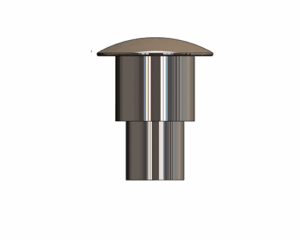
While traditional rivets are known for creating strong, static joints, the shoulder rivet, also known as a shoulder pin, transcends this role. It is an engineering component designed for dynamic applications. The shoulder acts as a load-bearing journal or shaft, providing a smooth, consistent surface for rotating parts to move against. The head and the clinched shank lock the rivet in place, ensuring the axial position is fixed while rotational freedom is maintained. This article explores the nuanced advantages and critical applications of using shoulder rivets as axles, offering a comprehensive guide for engineers, designers, and manufacturers.
Table of Contents
- What Exactly is a Shoulder Rivet? A Deeper Look at its Anatomy
- Why Choose a Shoulder Rivet as a Pivot or Axle?
- Shoulder Rivets vs. Shoulder Screws: Which is Right for Your Application?
- Critical Applications in Modern Electronics
- The Role of Shoulder Rivets in Precision Machinery
- How to Select the Perfect Shoulder Rivet: A Material and Design Guide
- Partnering with the Right Supplier for Your Axle Rivet Needs
- Conclusion: The Shoulder Rivet as an Unsung Engineering Hero
- Frequently Asked Questions (FAQ)
What Exactly is a Shoulder Rivet? A Deeper Look at its Anatomy
To understand why shoulder rivets excel as axles, it’s essential to examine their three core components. Each part is meticulously engineered to perform a specific function, and their interplay is what allows for both secure fastening and precise movement.
The Head: Providing a Secure Stop
The head of the rivet serves as a fixed flange and mechanical stop. It prevents the riveted component from pulling through the assembly and provides a large surface area to distribute load. Common head styles like truss, round, or flat countersunk offer different benefits, from low-profile integration to maximum bearing surface. The head’s integrity is crucial for the overall stability of the pivot point.
The Shoulder: The Critical Axle Component
This is the most important feature for pivot applications. The shoulder is the unthreaded, solid section between the head and the shank. Its diameter is manufactured to a tight tolerance, ensuring a snug but free-moving fit with the rotating component (like a gear, lever, or link). The length of the shoulder precisely defines the spacing between components, eliminating the need for separate spacers or bushings and simplifying the assembly. This dimension is what transforms the fastener into a high-performance axle.
The Shank (Tenon): The Point of Fastening
The shank is the part of the rivet that passes through the base material and is then cold-formed or “upset” during installation to create a second head (the clinch). This process permanently locks the rivet in place. The diameter of the shank is typically smaller than the shoulder, which allows the rotating component to move freely on the shoulder without interference from the stationary base material.
Why Choose a Shoulder Rivet as a Pivot or Axle?
Engineers choose shoulder rivets over other solutions like screws, pins, or complex assemblies for several compelling reasons, especially in high-volume production and applications demanding long-term reliability.
Unmatched Permanence and Vibration Resistance
Once installed, a shoulder rivet forms a permanent, integral part of the assembly. The cold-forming process creates a solid, locked joint that is highly resistant to loosening under constant vibration, shock, or thermal cycling. This is a significant advantage in electronics housed in moving vehicles or machinery with high operational speeds, where threaded fasteners could potentially back out and cause catastrophic failure.
Precision Tolerances for Smooth Rotation
At RivetJL, shoulder rivets are manufactured with highly precise shoulder diameters and lengths. This precision ensures a minimal-play, low-friction rotational interface. The result is a smooth, predictable motion without the “slop” or wobble that can develop in less precise joints, which is critical for the accuracy of precision machinery and the user experience of electronic devices.
Space and Weight Efficiency in Miniaturized Designs
In modern electronics, every millimeter and every gram counts. Shoulder rivets offer a low-profile, lightweight solution for creating pivot points. Their ability to simultaneously act as a fastener, spacer, and axle eliminates the need for additional components like nuts, washers, and bushings, leading to a more compact, lighter, and simpler design.
Cost-Effectiveness at Scale
For high-volume manufacturing, shoulder rivets are exceptionally cost-effective. The speed of automated or semi-automated riveting processes is significantly faster than installing and torquing threaded fasteners. This reduction in assembly time, combined with the lower unit cost of the rivet itself, translates into substantial savings on the total cost of production.
Shoulder Rivets vs. Shoulder Screws: Which is Right for Your Application?
While both shoulder rivets and shoulder screws can create pivot points, their fundamental differences make them suitable for very different scenarios. The choice between them depends on priorities such as serviceability, assembly speed, and resistance to environmental factors.
| Feature | Shoulder Rivet | Shoulder Screw (Stripper Bolt) |
|---|---|---|
| Installation | Permanent, high-speed installation via pressing, impact, or orbital riveting. | Removable, slower installation requiring threaded holes and precise torque. |
| Permanence | Permanent joint. Not designed for disassembly. | Non-permanent. Designed for service, repair, and disassembly. |
| Vibration Resistance | Excellent. The solid, clinched joint is inherently resistant to loosening. | Fair to Good. Can loosen without thread-locking compounds or lock washers. |
| Assembly Speed | Extremely fast, ideal for automated, high-volume production. | Slower due to threading and torquing process. |
| Cost (at scale) | Generally lower per-unit cost and lower assembly cost. | Higher per-unit cost and higher assembly cost. |
| When to Use | “Set and forget” applications where no future service is needed and high vibration is present. (e.g., internal electronics, sealed machinery). | Applications requiring regular maintenance, adjustments, or component replacement. (e.g., machine tooling, access panels). |
Critical Applications in Modern Electronics
The drive for smaller, more reliable electronic devices has made the shoulder rivet an indispensable component. Its strength and compactness make it a perfect fit for a variety of sophisticated applications.
Pivot Points in Laptop Hinges and Enclosures
In the compact design of a modern laptop, the hinge mechanism must withstand thousands of open-close cycles. Shoulder rivets provide a strong, low-profile axle for these hinges, ensuring a consistent, smooth action without loosening over time. The shoulder’s precise diameter acts as the bearing surface, preventing the joint from developing play, a common failure point for screw-based assemblies.
Axles for Gears and Levers in Printers and Scanners
The intricate paper-feeding mechanisms and moving sensor arms inside printers, scanners, and copiers rely on a series of small gears and levers. Shoulder rivets serve as the perfect axles for these plastic or metal components, providing a stable axis of rotation that ensures precise timing and movement, critical for print quality and document handling.
Spacers and Standoffs for Printed Circuit Boards (PCBs)
While not a dynamic application, shoulder rivets can be used to permanently mount and space PCBs within an enclosure. The shoulder creates a precise, fixed gap, ensuring electrical isolation and preventing board flex, while the permanent installation guarantees the board will not come loose due to shock or vibration.
Securing Connectors and Components with Rotational Needs
Certain electronic connectors, latches, or ejector mechanisms require a small, robust pivot point. Miniature shoulder rivets provide a reliable axle for these moving parts, ensuring they operate smoothly and securely over the product’s lifespan.
The Role of Shoulder Rivets in Precision Machinery
In the world of precision machinery and automation, reliability and accuracy are non-negotiable. Shoulder rivets provide a robust and permanent solution for creating pivot points that can withstand high loads and repetitive motion.
Linkage and Lever Systems in Automation
Automated assembly lines and robotic systems often use complex linkage systems to transfer motion. Shoulder rivets are ideal for connecting these links, creating durable pivot joints that maintain tight tolerances over millions of cycles. Their resistance to vibration ensures the machine’s kinematic accuracy remains consistent over time.
Axles for Cams and Rollers
Small rollers, cam followers, and guide wheels are common in material handling systems and machinery. A shoulder rivet can act as a simple, highly effective axle for these components, providing a smooth surface for rotation while being securely anchored to the machine frame.
Pivot Pins in Gauges and Measurement Instruments
In analog gauges, meters, and other precision instruments, the movement of the needle or indicator must be fluid and exact. A miniature shoulder rivet provides a nearly frictionless pivot point, allowing for sensitive and accurate measurements without the risk of the joint loosening and affecting calibration.
How to Select the Perfect Shoulder Rivet: A Material and Design Guide
Choosing the right shoulder rivet requires a careful consideration of the application’s mechanical, environmental, and aesthetic requirements. Answering the question, “How do I choose the right rivet?” involves looking at materials, dimensions, and head style.
Material Matters: Steel, Stainless Steel, Brass, and Copper
The material of the rivet dictates its strength, corrosion resistance, and conductivity.
- Low Carbon Steel (e.g., 1006-1018): The most common and cost-effective choice. Ideal for general-purpose applications where high strength is not the primary concern. Often plated with zinc or nickel for corrosion resistance.
- Stainless Steel (e.g., 302, 316): Offers excellent corrosion resistance, making it suitable for medical devices, food processing machinery, and products exposed to moisture or chemicals.
- Brass and Copper: Chosen for their excellent electrical conductivity and corrosion resistance. Commonly used in electrical assemblies and circuit boards. They are also softer and easier to clinch.
Understanding Critical Dimensions: Shoulder Diameter and Length
These are the two most critical dimensions for an axle application.
- Shoulder Diameter: Should be specified to match the inner diameter of the rotating component for a snug, low-play fit. Tighter tolerances on this dimension lead to more precise movement.
- Shoulder Length: Must be slightly longer than the thickness of the component(s) it is supporting to allow for free rotation without axial binding. This dimension dictates the precise spacing in the assembly.
Head Style Considerations for Performance and Aesthetics
The head style affects both the look and function of the joint. A truss head offers a wide, low-profile bearing surface, while a flat countersunk head allows for a flush finish with the material surface. A round head is a common, general-purpose choice.
The Importance of Surface Finish and Plating
Plating, such as zinc, nickel, or tin, can be applied to enhance corrosion resistance, improve lubricity for smoother rotation, or alter the rivet’s appearance. The surface finish of the shoulder itself is also critical; a smoother finish will result in less friction and wear on the rotating component.
Partnering with the Right Supplier for Your Axle Rivet Needs
The performance of your final product is directly tied to the quality of its smallest components. When using shoulder rivets as critical axles, partnering with an expert manufacturer like RivetJL is essential for success.
The Value of Custom Manufacturing
Off-the-shelf parts may not meet the exact specifications your design demands. A specialized manufacturer can produce custom shoulder rivets with precise shoulder diameters, lengths, head styles, and materials tailored to your specific application. This ensures optimal performance, fit, and function, eliminating design compromises.
Ensuring Quality Control and Material Certification
A reputable supplier provides rigorous quality control, ensuring that every rivet meets specified dimensional tolerances. They should also be able to provide material certifications, guaranteeing that the rivets are made from the specified alloy and will perform as expected under load and environmental stress. This commitment to quality is the foundation of a reliable and long-lasting product.
Conclusion: The Shoulder Rivet as an Unsung Engineering Hero
The humble shoulder rivet is far more than a simple fastener. It is a sophisticated, multi-functional component that provides a permanent, reliable, and cost-effective solution for creating axles and pivot points in some of today’s most advanced electronics and precision machinery. By understanding its unique anatomy, benefits, and applications, engineers and designers can leverage this versatile part to create more robust, compact, and efficient products. From the hinge on a laptop to a gear in an automated robot, the shoulder rivet is an unsung hero of modern engineering, enabling motion with precision and permanence.
Frequently Asked Questions (FAQ)
Can a shoulder rivet be used as a bearing surface?
Yes, the shoulder of the rivet is specifically designed to act as a journal or bearing surface. For high-cycle or high-load applications, selecting a rivet made from a hard material with a smooth surface finish is crucial to minimize wear.
How are shoulder rivets installed?
Shoulder rivets are installed using a riveting machine that applies controlled force (impact, orbital, or squeeze/press) to the shank. This force causes the shank to deform and form a clinch head, permanently locking the rivet in place.
What tolerances are possible with shoulder rivets?
Precision manufacturers can hold very tight tolerances on the shoulder diameter and length, often within ±0.002 inches (0.05 mm) or even tighter for specialized applications. This precision is key to their function as a reliable axle.
What is the difference between a solid and a semi-tubular shoulder rivet?
A solid shoulder rivet has a solid shank and requires more force to install but offers maximum strength. A semi-tubular shoulder rivet has a hole in the end of the shank, requiring significantly less force to clinch. This makes it ideal for more delicate materials and faster assembly, while still providing excellent pivot functionality.