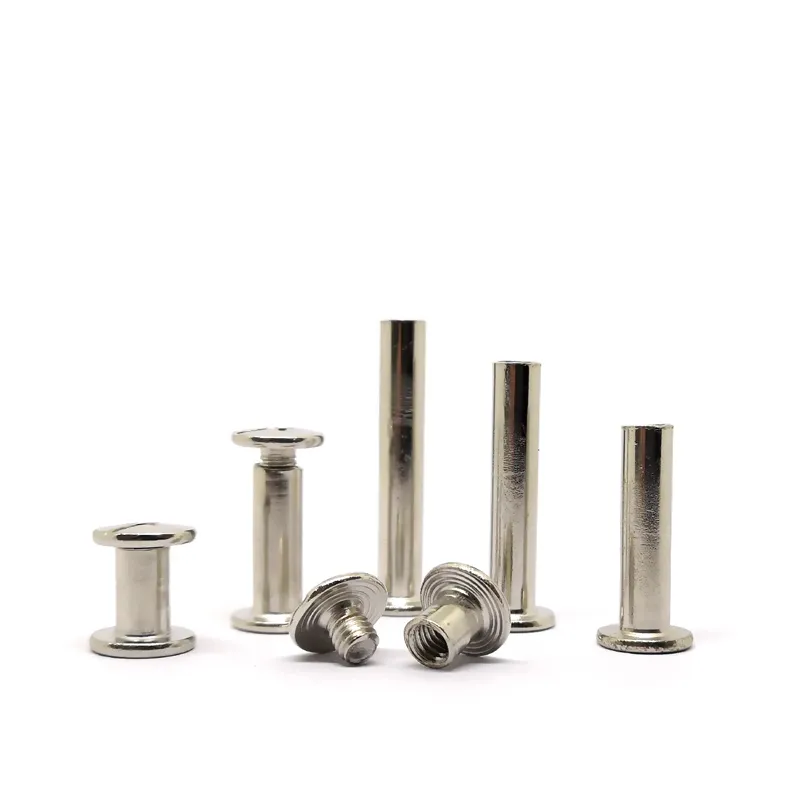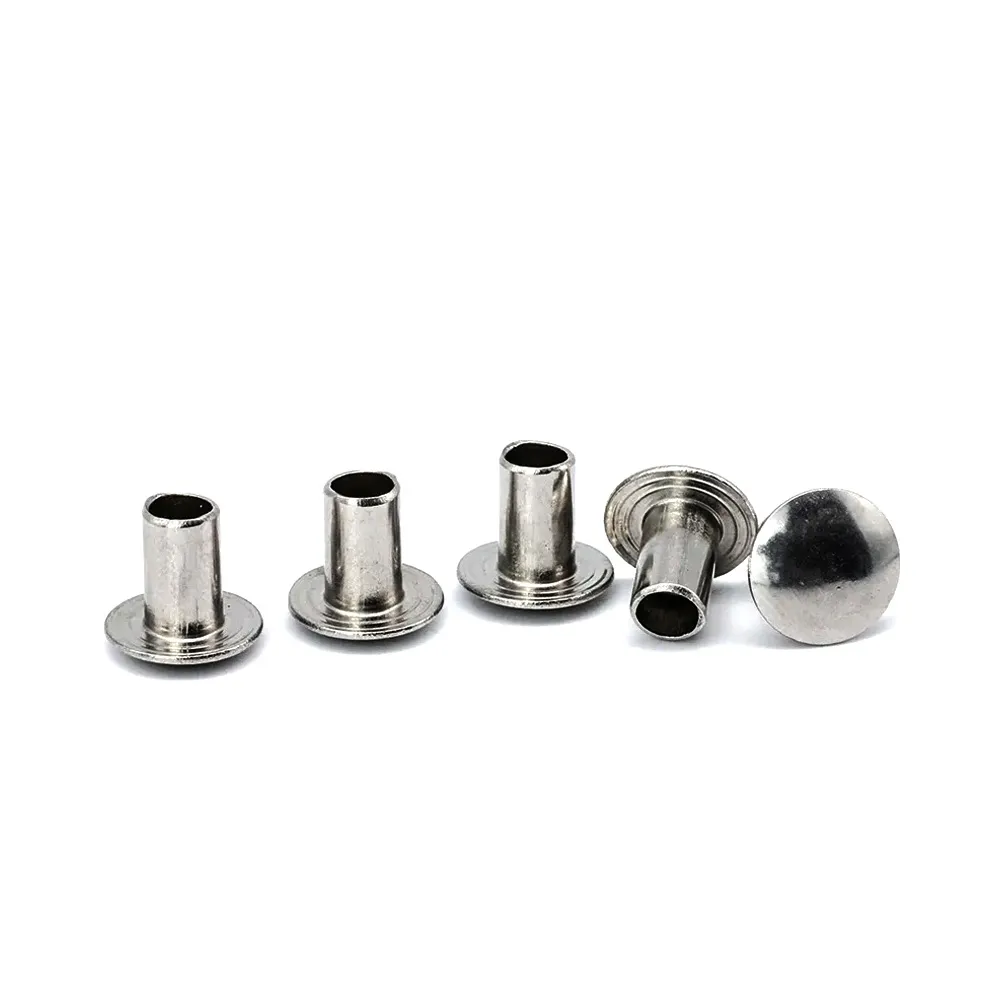
Specifying the wrong fastener can lead to either costly maintenance bottlenecks or compromised structural security. If you ignore the mechanical locking mechanism, you risk permanent damage during disassembly. Male-female rivets are only reusable if you specify a threaded screw-type design; press-fit versions are strictly single-use.
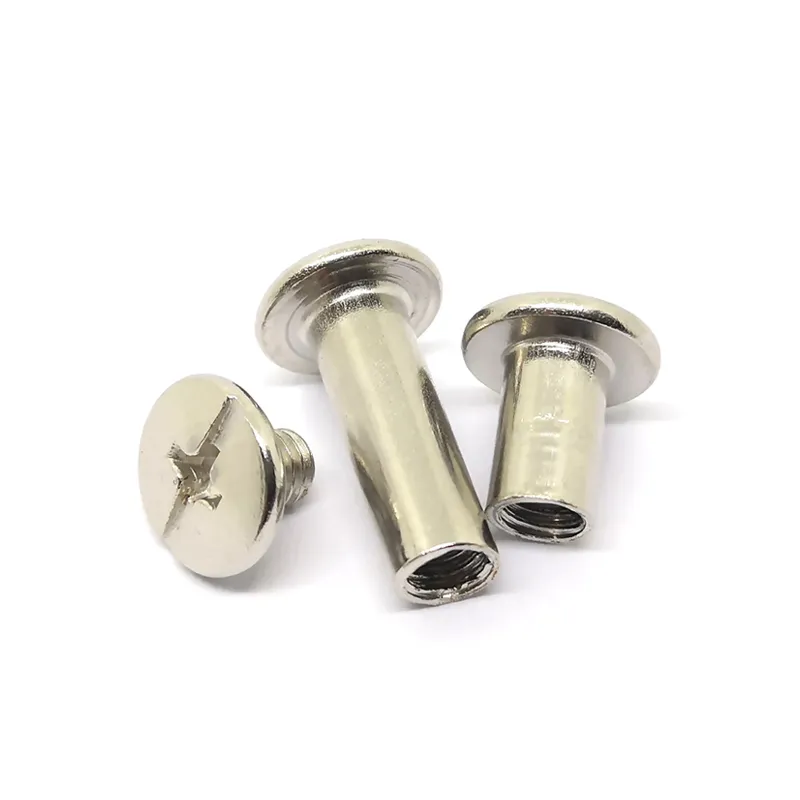
As a manufacturing engineer, I constantly see designers select fasteners based solely on aesthetics or initial unit cost, completely overlooking the product’s end-of-life or maintenance requirements. Determining whether your assembly requires future accessibility at the design stage dictates exactly which style of two-piece fastener you must source. Let’s examine the mechanics behind reusability and how to specify the right component.
Table of Contents
- How Does Fastener Design Dictate Reusability?
- What Factors Determine the Lifespan of Reusable Rivets?
- Where Are Reusable Male-Female Rivets Most Effective?
1. How Does Fastener Design Dictate Reusability?
The physical geometry of the mating components controls whether the joint is permanent or temporary. Understanding the difference between mechanical threads and friction locks prevents costly teardown failures on the assembly line.
Screw-type male-female rivets are fully reusable because they rely on a threaded mechanical interlock that allows for repeated assembly and disassembly. Conversely, press-fit or crimped male-female rivets rely on permanent plastic deformation or friction locking, making them strictly one-time-use, tamper-proof fasteners.
Evaluating Screw-Type vs. Press-Fit Mechanisms
The fundamental decision in specifying male-female rivets revolves around the product’s lifecycle. A screw-type design (often called a Chicago screw or binding post) features a male threaded stud that screws into a female tapped barrel. This threaded mechanical interlock allows field technicians or end-users to easily unscrew the fastener with standard tools to perform maintenance, upgrades, or parts replacement without causing any damage to the surrounding substrate.
In contrast, a press-fit or crimped male-female rivet uses a smooth or knurled male stud that is forced into a hollow female barrel under high pressure. The materials undergo plastic deformation, or a severe friction lock occurs. Once installed, attempting to separate these pieces will strip the internal walls or snap the stud, destroying the fastener and potentially the host material. Selecting the right fixing mechanism is paramount to product functionality.
- Expandable Binding and Display Components: In products like heavy-duty sample books, menus, or architectural portfolios, screw-type male-female rivets are standard. They allow sales representatives to repeatedly remove or add pages, proving that threaded designs are built for lifecycle flexibility and ease of field maintenance.
- Integral Molding and Secure Fastening: For light electronic housings or tamper-proof security enclosures, press-fit male-female rivets are utilized. Once the two halves are pressed together, they form a permanent connection that provides high anti-loosening properties and prevents unauthorized access to sensitive internal circuitry.
Table 1: Comparison of Reusability and Locking Mechanisms
| Rivet Type | Reusable? | Fixing Mechanism | Typical Applications |
| Screw-Type | ✔ Yes (Usually) | Threaded mechanical interlock | Leather goods, binders, architectural decor |
| Press-Fit / Crimped | ✘ One-time | Plastic deformation or friction lock | Light electronic housings, security fastening |
2. What Factors Determine the Lifespan of Reusable Rivets?
Even threaded fasteners have a finite lifespan. Ignoring metallurgical properties and environmental factors leads to stripped threads and seized joints, rendering a supposedly reusable fastener entirely useless in the field.
The lifespan of a reusable male-female rivet is dictated by material hardness, thread manufacturing quality, installation torque, and environmental exposure. Harder metals like stainless steel resist thread wear significantly better than soft aluminum, while precision-cut threads prevent cross-threading during repeated maintenance cycles.
Material Hardness and Thread Degradation
When a product is designed for regular disassembly, the mechanical wear on the internal and external threads becomes the primary failure mode. Material selection is the most critical variable here. Softer metals, such as brass or aluminum, offer excellent corrosion resistance and lightweight profiles, but they are highly susceptible to galling and thread wear if unscrewed frequently under load.
For applications requiring high-cycle reusability, harder metals like 304 or 316 stainless steel are mandatory. Stainless steel resists the microscopic shearing that flattens threads over time. Furthermore, the quality of the thread machining dictates longevity. Shallow threads or rough machining burrs will easily strip or bind during repeated disassembly, turning a reusable joint into a permanent, jammed headache.
- Aerospace Tooling Jigs: In reusable assembly fixtures, engineers specify hardened stainless steel male-female rivets. The high hardness ensures the threads do not strip even after hundreds of assembly and disassembly cycles during daily shifts.
- Trade Show Displays: A client manufacturing modular booths initially used low-cost, poorly tapped brass binding posts. After three shows, the shallow threads stripped, forcing the client to drill out the fasteners. Upgrading to precision-machined steel fasteners with deep, clean threads eliminated this maintenance failure.
Installation Practices and Environmental Variables
Human error and environmental conditions drastically reduce the lifespan of reusable fasteners. Overtightening is the most common culprit. When an operator applies excessive torque using power tools, the mechanical stress stretches the male stud and deforms the female barrel’s internal threads, accelerating wear and preventing future removal.
Environmental impact plays an equally destructive role. If a reusable fastener is exposed to harsh outdoor elements or industrial chemicals, corrosion or particulate contamination (like sand or grit) can infiltrate the threads. This contamination acts as an abrasive, grinding away the thread profiles during disassembly, or causing the metals to seize (cold weld) entirely, completely negating the fastener’s reusability.
- Precision Optical Equipment: Manufacturers require operators to use torque-limiting screwdrivers when installing screw-type male-female rivets. This strict torque control prevents thread distortion, ensuring the lenses can be recalibrated or replaced years later without fastener failure.
- Outdoor Interchangeable Signage: Specifying standard steel threaded rivets led to rapid rusting and seized joints within a year for an architectural client. Switching to passivated stainless steel and applying a specialized anti-seize compound ensures the fasteners remain fully removable despite heavy rain and temperature fluctuations.
3. Where Are Reusable Male-Female Rivets Most Effective?
Selecting a reusable fastener adds unit cost, so it must provide tangible value to the end-user. Identifying products that inherently require modularity, upgrades, or consumable replacements justifies this engineering choice.
Screw-type male-female rivets are ideal for modular product architectures where components must be frequently adjusted, replaced, or upgraded. They provide a high-end, finished aesthetic on both sides of the assembly while granting end-users the flexibility to perform non-destructive maintenance using standard hand tools.
Consumer Goods and Adjustable Architectures
The ability to disassemble a product without drilling out rivets or breaking plastic clips is a hallmark of premium product design. Reusable male-female rivets empower the consumer to extend the product’s life cycle, which is increasingly important in sustainable manufacturing and modular design frameworks.
These fasteners provide a smooth, low-profile, and aesthetically pleasing head on both sides of the joint, avoiding the sharp, industrial look of standard nuts and bolts. When the design calls for elegance combined with adjustability, threaded male-female systems are unparalleled in their utility.
- Adjustable Decorative Leather Goods: In high-end leather crafting—such as premium handbags, heavy-duty belts, or custom harness buckles—screw-type male-female rivets are the industry standard. They allow the craftsman or the consumer to easily unscrew the stud, swap out a damaged strap or upgrade a buckle, and reassemble the piece securely without damaging the expensive leather substrate or the rivet itself.
- Modular Office Furniture: In modern flat-pack or modular acoustic partitions, designers use heavy-duty threaded male-female fasteners to connect structural panels. This allows facility managers to quickly reconfigure office layouts, unbolting and moving panels without leaving unsightly holes or requiring specialized extraction tools.
Conclusion
When engineered correctly, male-female rivets offer unparalleled versatility. The decision to make a joint permanent (press-fit) or reusable (screw-type) must be established at the earliest CAD stages to prevent downstream maintenance disasters and ensure the product functions exactly as intended throughout its lifecycle.
Are you unsure whether your assembly requires a permanent friction lock or a high-cycle threaded solution?
Contact the engineering team at Dongguan Jiliang Machinery Hardware. We can review your lifecycle requirements and recommend the exact material, thread specification, and fastener style to ensure long-term reliability.
[Contact Our Engineering Team for a Fastener Audit]
Frequently Asked Questions (FAQ)
1. Are male-female rivets reusable?
Yes, if they are the screw-type (threaded) design. Press-fit or crimped male-female rivets are designed for permanent installation and cannot be reused once the halves are forced together.
2. How many times can a screw-type male-female rivet be reused?
This depends heavily on the material hardness and installation torque. A high-quality stainless steel fastener can be reused hundreds of times, while softer brass or aluminum fasteners may begin to show thread wear after a few dozen cycles.
3. Can I use a thread-locking fluid on reusable male-female rivets?
Yes. If you want a reusable joint to resist vibration loosening, you can apply a low-strength or medium-strength thread locker (like blue Loctite). This secures the threads during operation but still allows disassembly with standard hand tools.
4. Why did my threaded male-female rivet seize and break when I tried to remove it?
This is often caused by galling (especially common with stainless steel), over-torquing during the initial installation, or severe environmental corrosion. Using an anti-seize lubricant during assembly can prevent this.
5. Are press-fit male-female rivets completely tamper-proof?
While no fastener is 100% invincible, press-fit male-female rivets with smooth, low-profile heads are highly tamper-resistant. Because they lack a drive recess (like a Phillips or Torx slot) and rely on internal friction locking, they generally must be drilled out to be removed.
6. Do I need specialized tools to remove reusable male-female rivets?
Usually, no. Most screw-type male-female rivets feature standard drive recesses (Slotted, Phillips, or Hex) on one or both heads, allowing them to be removed with standard screwdrivers or Allen keys.
7. How do I prevent the female barrel from spinning when trying to unscrew the male stud?
If the female barrel has a smooth head, it may spin in the hole. You can prevent this by specifying a barrel with a knurled under-head (which bites into the material), or by using a barrel that features a matching drive slot so you can hold it steady with a second screwdriver.