Rivets are unthreaded mechanical fasteners used to create a permanent joint between two or more pieces of material. Comprising a smooth cylindrical shaft with a head on one end, a rivet is installed by placing it in a punched or drilled hole and deforming the tail end (the “shop head” or “buck-tail”) to lock it in place. The main types of rivets include solid, blind, tubular, and split rivets, each designed for specific applications ranging from aerospace engineering and structural steel construction to electronics and leather goods. Understanding which rivet to use is crucial for ensuring joint integrity, durability, and safety in any manufacturing or assembly process.

The Fundamental Anatomy of a Rivet
Before exploring the different kinds of rivets, it’s essential to understand their basic components. While designs vary, most rivets share a common anatomy that dictates their function and installation. Familiarity with these parts is the first step toward selecting the appropriate fastener for your application.
The primary components are the head, the shank (or body), and the tail. The head is the pre-formed, larger-diameter section that remains on one side of the material. The shank is the smooth, cylindrical body that passes through the holes of the materials being joined. The length and diameter of the shank are critical dimensions for a proper fit. The tail is the end opposite the head, which is mechanically deformed during installation to create a second head, called the shop head or buck-tail, securing the fastener permanently.
Classifying Rivets: Major Categories
Rivets can be broadly grouped into two main categories based on their installation method: conventional rivets and blind rivets. This distinction is fundamental because it determines whether you need access to both sides of the assembly to complete the joint.
Conventional rivets, such as solid and semi-tubular types, require access to both sides of the workpiece. One person or machine holds a tool (a bucking bar) against the tail while another person or machine uses a rivet gun or press to form the shop head. This method creates an exceptionally strong, reliable joint. In contrast, blind rivets are a revolutionary solution designed for applications where access to the backside of the joint is impossible. They are installed from one side using a special tool that pulls a mandrel through the rivet body, causing it to deform and secure the joint.
In-Depth Look at Common Rivet Types
The world of fasteners includes a diverse array of rivet designs, each engineered to meet specific challenges. From the high-strength demands of aircraft construction to the delicate assembly of electronic components, there is a rivet for nearly every purpose. Let’s examine the most prevalent types in detail.
Solid Shank Rivets
Solid rivets are one of the oldest and most reliable types of mechanical fasteners, consisting of a solid shaft with a manufactured head. To install them, the rivet is heated (for steel) or used cold (for aluminum) and inserted into the hole. A bucking bar is held against the tail while a pneumatic hammer or press forms the buck-tail. This process, known as upsetting, causes the rivet shank to expand and completely fill the hole, creating a tight, vibration-resistant joint.
Their key characteristic is unparalleled shear strength, making them the preferred choice for structural applications where safety and durability are paramount. You will find solid rivets in aircraft fuselages, bridges, boilers, and heavy machinery. They come with various head styles, including round (button), flat, and countersunk, to meet different aerodynamic or finishing requirements. The primary materials used are steel, stainless steel, aluminum, and titanium.
Blind Rivets (Pop Rivets)
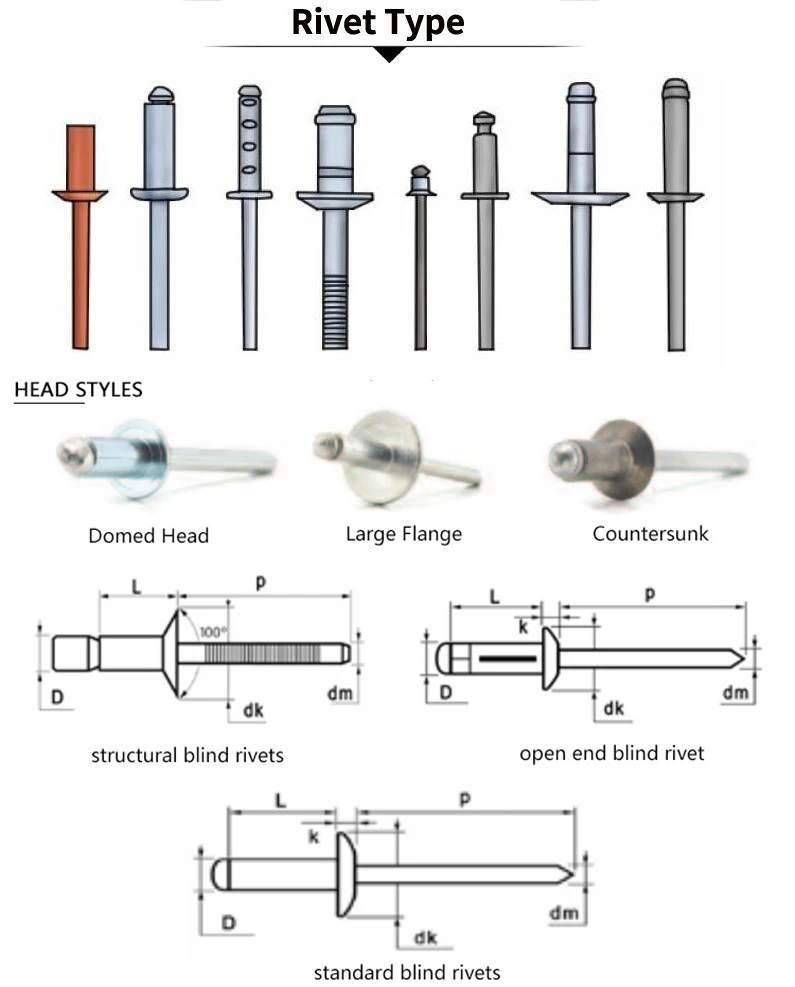
Blind rivets, commonly known by the trade name “Pop Rivets,” are a cornerstone of modern assembly. They are a two-piece fastener consisting of a rivet body and a mandrel. They are installed by inserting the rivet into a hole and using a rivet tool to grip and pull the mandrel. The mandrel head expands the blind end of the rivet body, clamping the materials together. Once the joint is tight, the mandrel breaks off at its pre-determined weak point, leaving a secure, permanent fastener.
The primary advantage of blind rivets is their ability to be installed from one side of the workpiece, making them indispensable for fastening in enclosed spaces or hollow profiles. They are widely used in automotive assembly, electronics, sheet metal fabrication, and even home repairs. While not as strong as solid rivets, modern structural blind rivets offer significant shear and tensile strength for demanding applications.
Tubular & Semi-Tubular Rivets
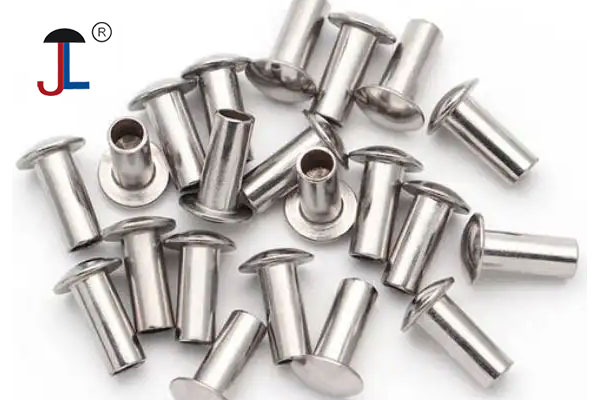
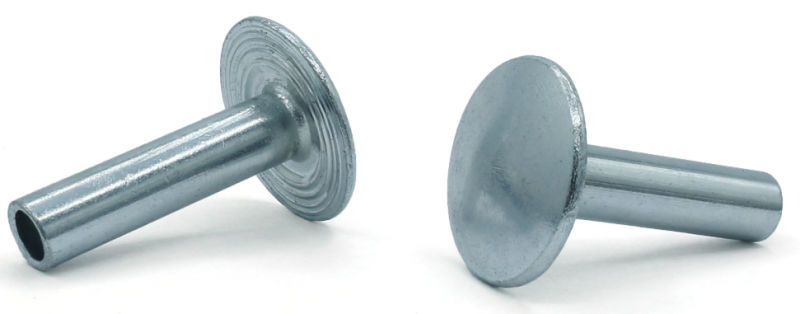
Tubular rivets feature a partially hollow shank. In a semi-tubular rivet, the hole at the tail end does not exceed 112% of the shank diameter, while a fully tubular rivet is hollow nearly to the head. This design dramatically reduces the amount of force needed for installation compared to a solid rivet. The rivet is set by a press that flares or rolls the hollow end outward, clinching the material.
These rivets are ideal for joining materials that are soft or brittle, such as plastics, textiles, and circuit boards, as the lower installation force prevents damage. Their applications are vast, including brakes, lighting fixtures, ladders, and electronic enclosures. They are a cost-effective solution for creating pivot points or achieving a strong clinch in non-structural or light-load-bearing joints.
Drive Rivets
Drive rivets are a type of blind rivet with a short, protruding mandrel that is installed by simply hammering it flush with the rivet head. As the pin is driven into the rivet body, it forces the slotted end of the shank to flare outwards, locking the rivet in place. This makes for an incredibly fast and simple installation process that requires no special tools beyond a hammer.
Because of their ease of use, drive rivets are often used to attach panels, signs, or nameplates to solid or blind-hole surfaces. They are common in automotive applications for attaching trim and in construction for fastening components to concrete or masonry. However, their holding power is generally lower than other rivet types, making them unsuitable for high-stress applications.
Split Rivets (Bifurcated Rivets)
Split rivets, also known as bifurcated rivets, have a shank that is split into two “legs” for its entire length or a portion of it. They are installed by pushing the rivet through a pre-drilled hole and then bending the legs outward and flat against the material. This self-piercing capability allows them to be used in soft materials like leather, wood, and plastic without a pre-drilled hole.
Their applications are typically in light-duty or decorative scenarios. You will find them in leather goods like belts and bags, binders, and other craft or repair projects. They offer a fast, simple fastening solution but provide minimal structural strength.
Flush Rivets (Countersunk Rivets)
Flush rivets, or countersunk rivets, are designed with a tapered head that sits flush with the surface of the material after installation. To use them, the hole in the top material must be countersunk to match the angle of the rivet head. This creates a smooth exterior surface, which is critical for applications where aerodynamics and aesthetics are important.
The most prominent use of flush rivets is on the exterior skin of aircraft to reduce drag. They are also used on high-speed boats, trains, and any application where a protruding fastener head is undesirable. They function similarly to solid rivets in terms of strength but require more precise hole preparation.
Critical Factors in Rivet Selection: How to Choose the Right Fastener
What determines the best rivet for a project? Selecting the correct fastener goes beyond just picking a type. Engineers and designers must consider several critical factors to ensure the joint’s performance, safety, and longevity. An incorrect choice can lead to premature failure, corrosion, or structural instability.
Material Compatibility and Corrosion
One of the most important considerations is the material of both the rivet and the substrates being joined. To prevent galvanic corrosion, the rivet material should be compatible with the materials it is fastening. For example, using a steel rivet to join aluminum sheets in a damp environment can lead to rapid corrosion and joint failure. As a general rule, the rivet should be made of the same material as the components being joined. If this is not possible, choose materials that are close together on the galvanic scale.
Understanding Shear and Tensile Strength
The forces that a joint will experience are a primary driver of rivet selection. Shear strength is the rivet’s ability to resist forces that are trying to slide the joined materials past each other. Tensile strength is its ability to resist forces pulling the materials apart. Solid rivets offer the highest shear strength, while certain structural blind rivets are engineered for high performance in both shear and tensile applications. Always match the rivet’s specified strength ratings to the load requirements of your design.
Grip Range: A Decisive Parameter
Grip range refers to the minimum and maximum total material thickness that a specific rivet can effectively join. This is especially critical for blind rivets. If the material thickness is too small for the rivet’s grip range, the blind side will not form properly, resulting in a loose joint. If the thickness is too large, the rivet will not be able to expand enough to create a secure fastening. Always measure the total thickness of your materials and choose a rivet with a grip range that encompasses that measurement.
Head Style and Its Impact on Design
The rivet head style affects both the performance and the final appearance of the assembly. A dome head is the most common and provides ample strength. A large flange head distributes the clamping force over a wider area, making it ideal for thin or brittle materials. A countersunk head, as mentioned earlier, creates a flush finish for aerodynamic or aesthetic reasons. The choice of head style should be a deliberate decision based on the functional and visual requirements of the product.
Rivet Materials: A Guide to Performance and Durability
The material a rivet is made from dictates its strength, weight, corrosion resistance, and cost. Below is a table outlining common rivet materials and their typical applications.
| Material | Properties | Best For |
|---|---|---|
| Aluminum | Lightweight, good corrosion resistance, moderate strength. | Aerospace, sheet metal, electronics, and applications where weight is a concern. |
| Steel (Low Carbon) | Strong, durable, and cost-effective. Often plated (zinc, cadmium) for corrosion resistance. | General manufacturing, automotive, construction, and structural applications not exposed to harsh environments. |
| Stainless Steel | Excellent corrosion and heat resistance, high strength, and hygienic. | Marine environments, food processing equipment, chemical and medical applications. |
| Copper | Excellent electrical and thermal conductivity, good corrosion resistance, aesthetically pleasing. | Electrical applications, roofing, leather goods, and decorative uses. |
| Titanium | Exceptional strength-to-weight ratio, superior corrosion resistance, high-temperature performance. | High-performance aerospace applications, military hardware, and racing components. |
Conclusion: Making the Right Connection for Your Project
Rivets are a foundational technology in modern manufacturing and construction, offering a reliable method for creating strong, permanent joints. From the brute strength of solid steel rivets holding together a bridge to the precision of semi-tubular rivets in a circuit board, each type has been engineered to solve a specific fastening challenge. By understanding the different types, their installation methods, and the critical selection criteria—such as material compatibility, strength requirements, and grip range—you can make informed decisions that enhance the quality and reliability of your final product.
At Xiluomold, we understand that every component, no matter how small, plays a vital role in the success of a project. While we specialize in high-precision mold manufacturing, our expertise extends to the principles of robust mechanical assembly. Choosing the right fastener is a critical step in that process, ensuring that expertly molded parts perform as designed. For any complex manufacturing project, partnering with experts who appreciate the importance of every detail is key to achieving excellence.